
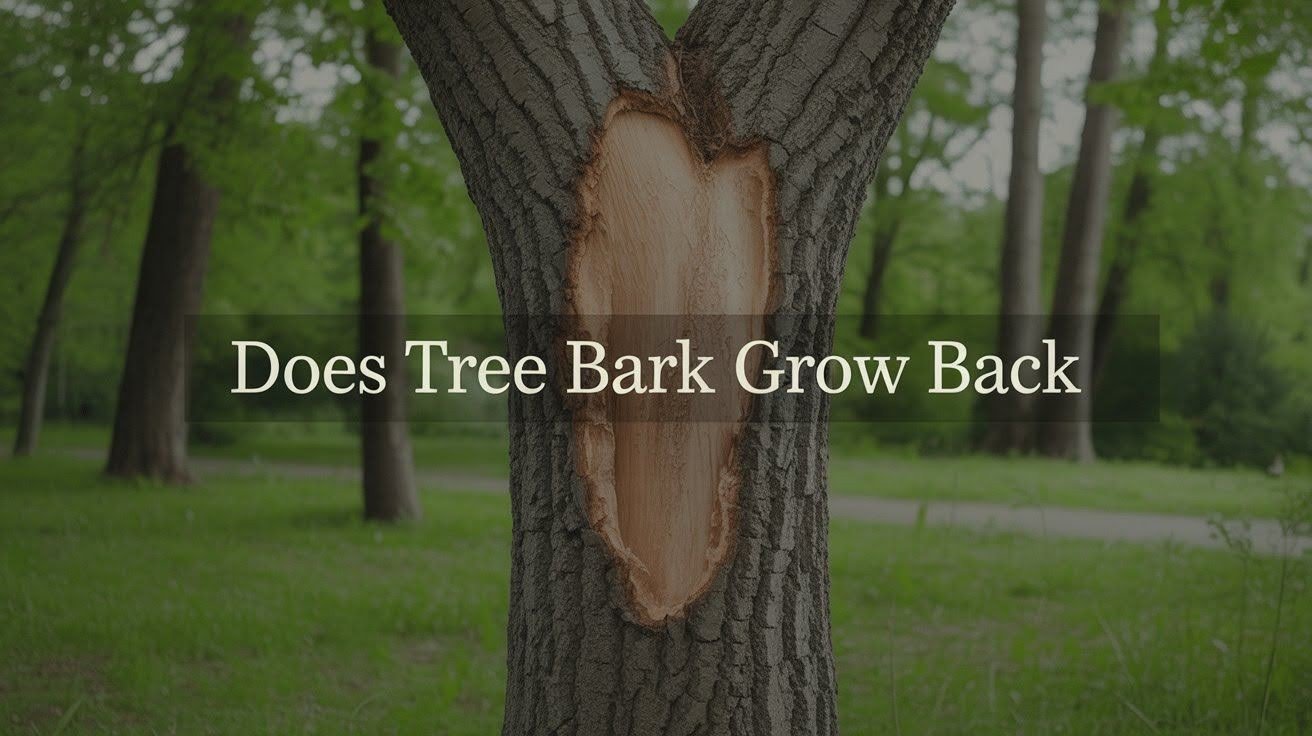
Have you ever found a scar on a tree that you love in your yard and wondered whether it would heal? Maybe your lawnmower rubbed the trunk, or a deer rubbed off a patch of bark. It might be a surprise to you: tree bark does not regenerate like human skin.
It is not like a scraped knee, which gets new skin, new cowl, trees are different. They close their wounds with a seal instead of actually healing them. The damaged protective layer that you have seen today will not be the same.
This Guide helps you. Nevertheless, here is the good part of the story: most trees can survive and even become stronger through bark loss if the damage is not too severe. Understanding the trees’ reaction to the injury will help you give them the best recovery.
Does Tree Bark Grow Back?
The short answer is no, tree bark does not grow back once it’s been completely stripped away. This reality surprises many homeowners who assume trees heal like animals do. When you see a scarred trunk years after damage, that’s the tree’s permanent record of injury.
However, trees aren’t helpless. While the lost bark won’t regenerate, healthy trees can form new tissue around wound edges. This callus tissue gradually covers the exposed area, though it never perfectly replicates the original bark structure.
The key factor is whether damage encircles the entire trunk. Partial bark loss gives trees a fighting chance. Complete girdling, where bark is removed all the way around, cuts off the tree’s lifeline and proves fatal in most cases.
Why Tree Bark Is Essential?
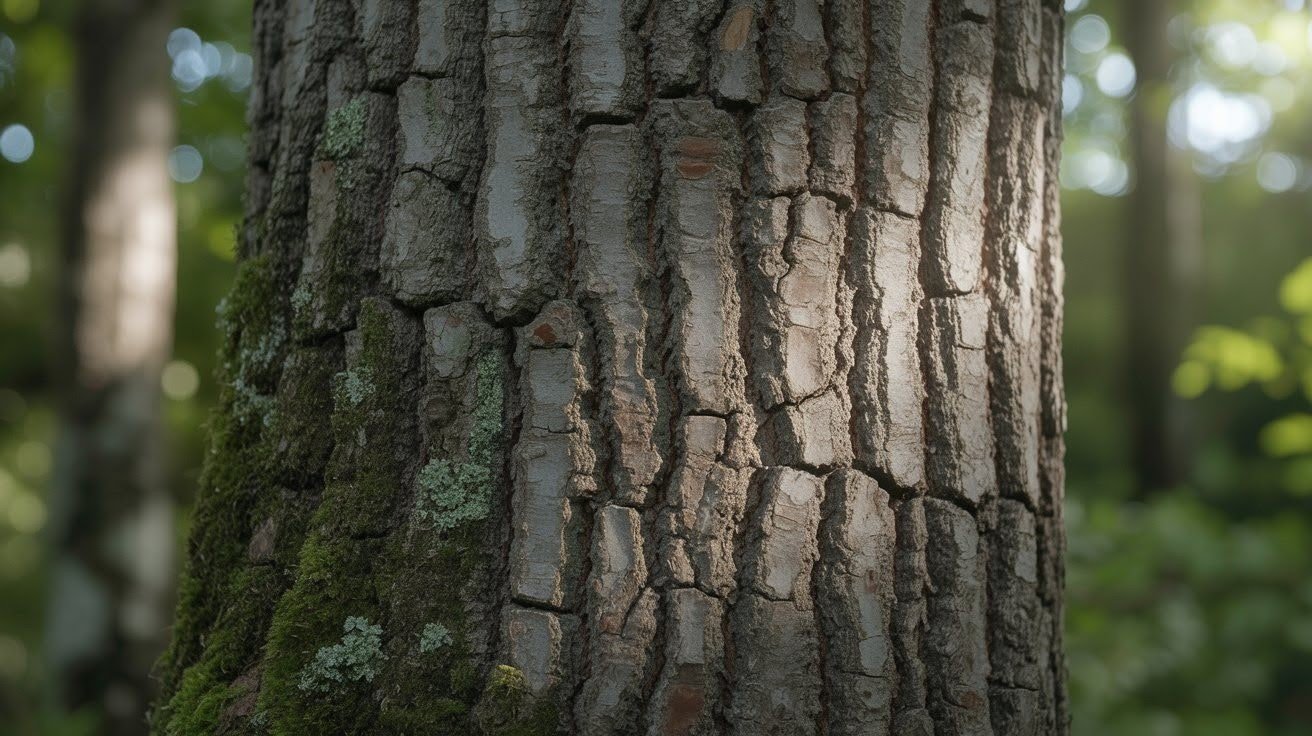
Tree bark might seem simple, but it’s one of the most important parts of a tree’s life, like skin is to us. It protects the tree from harsh weather, pests, and diseases that could harm it. Without bark, a tree would struggle to survive even a single season.
Inside that tough outer layer, bark also helps transport water and nutrients from the roots to the leaves. It’s constantly working behind the scenes to keep the tree healthy and growing strong, no matter the environment.
When you walk through a forest, notice how every tree’s bark looks different. Rough, smooth, peeling, or patterned. Each type tells a story about how that tree adapts to its surroundings, making bark not just essential but fascinating in its own way.
What Happens When Bark Is Damaged?
When bark gets damaged, your tree faces an immediate crisis that triggers a complex survival response requiring quick assessment from you.
Common Causes
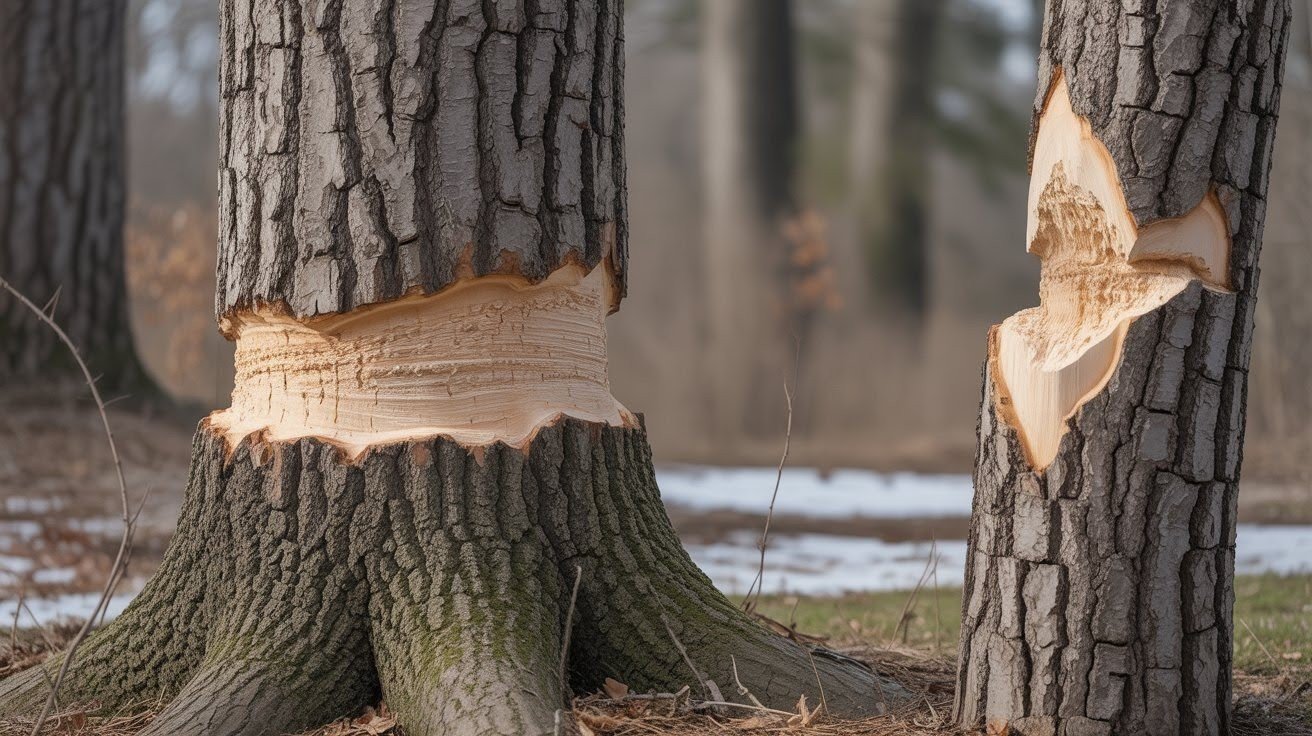
Mechanical damage tops the list of bark injuries in residential settings. That string trimmer or lawnmower that gets too close can slice through bark in seconds, causing wounds that take years to seal. Vehicle impacts, construction equipment, and even staked plants rubbing in the wind create similar problems.
Wildlife contributes significantly to bark damage, especially in suburban areas. Male deer rub velvet from their antlers on young trees, often stripping bark completely around slender trunks. Rodents gnaw bark for food during winter, sometimes girdling trees at the snow level.
Environmental stress and pest attacks round out common causes. Sunscald occurs when winter sun warms bark during the day, then tissues freeze at night, causing cells to rupture. Late spring frosts can kill active cambium. Boring insects tunnel through bark to feed, while fungal diseases can kill patches of bark tissue.
The Tree’s Natural Response
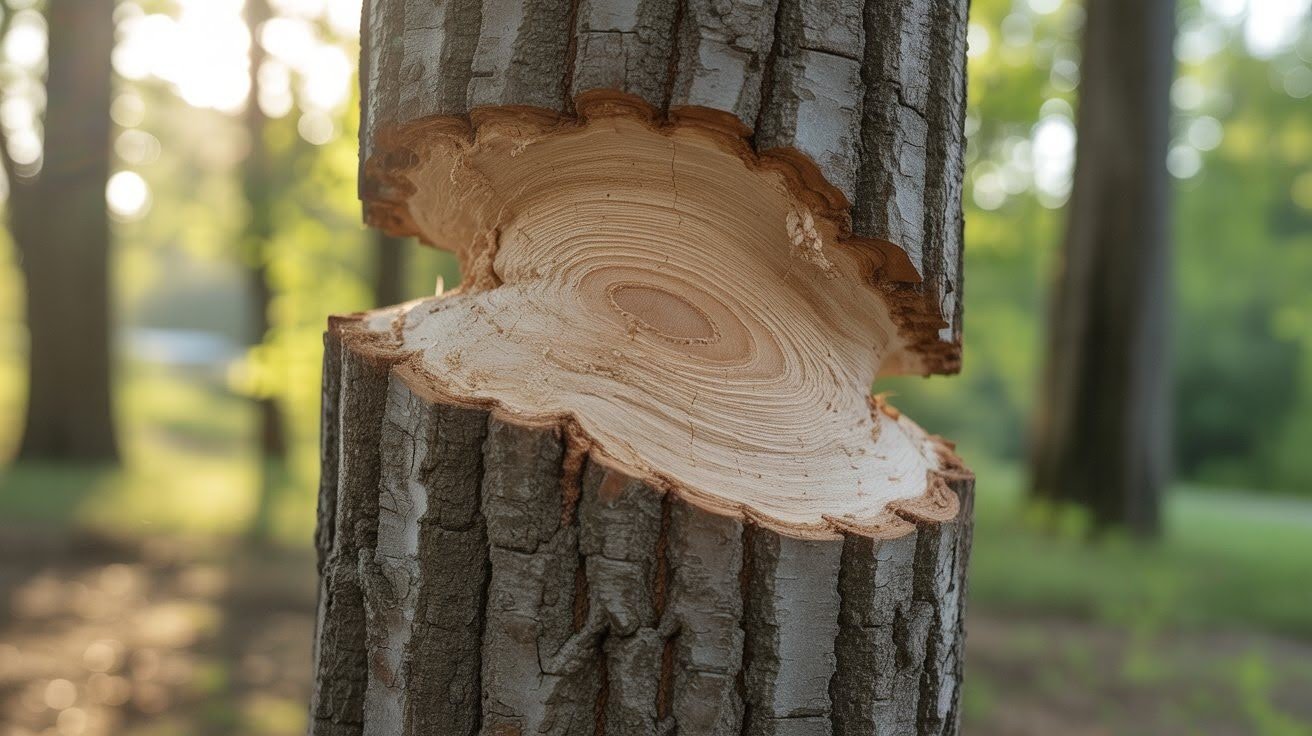
Trees can’t run from danger or fight off attackers directly, so they’ve developed sophisticated internal defense mechanisms. The moment bark breaks, the tree begins isolating the wound chemically and structurally.
Callus tissue formation starts within days to weeks after injury, depending on the season and tree health. You’ll notice swollen, rounded tissue at wound edges as cambium cells multiply rapidly.
Compartmentalization happens simultaneously. The tree builds walls of specialized cells around the damaged area, essentially quarantining it from healthy tissue. These barriers don’t eliminate decay organisms already present, but they prevent spread to undamaged areas.
Healing Limitations
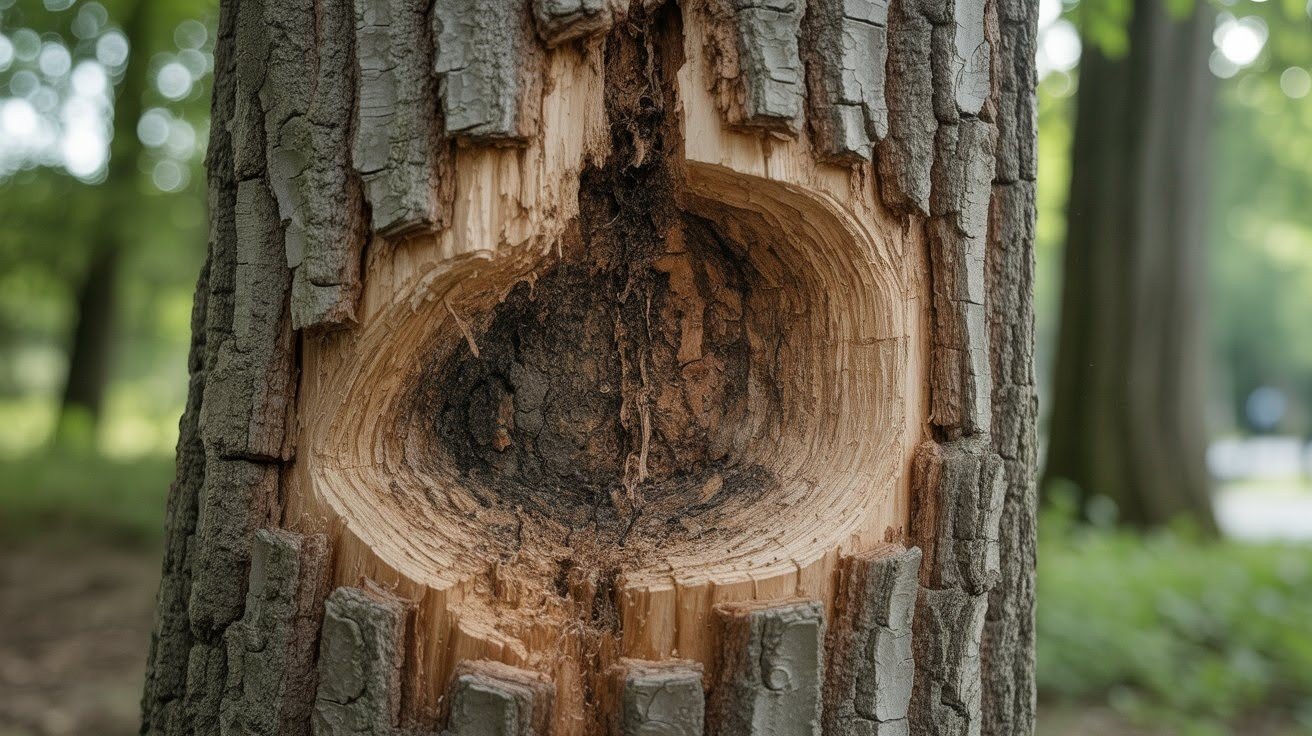
Only the cambium and inner bark possess the ability to generate new cells after injury. These growth-capable layers work hard to produce callus tissue, but they can’t manufacture replacement outer bark.
The scarred wood beneath a sealed wound never returns to its original strength or function. Decaying organisms that entered before compartmentalization completed their work continue digesting wood within those barriers.
Time constraints matter significantly. Large wounds may require decades to seal completely, if they ever do. During those years, the exposed area remains vulnerable to new infections and environmental stress. Homeowners often ask,, Does tree bark grow back?” hoping for a quick recovery.
Speed of Callus Formation
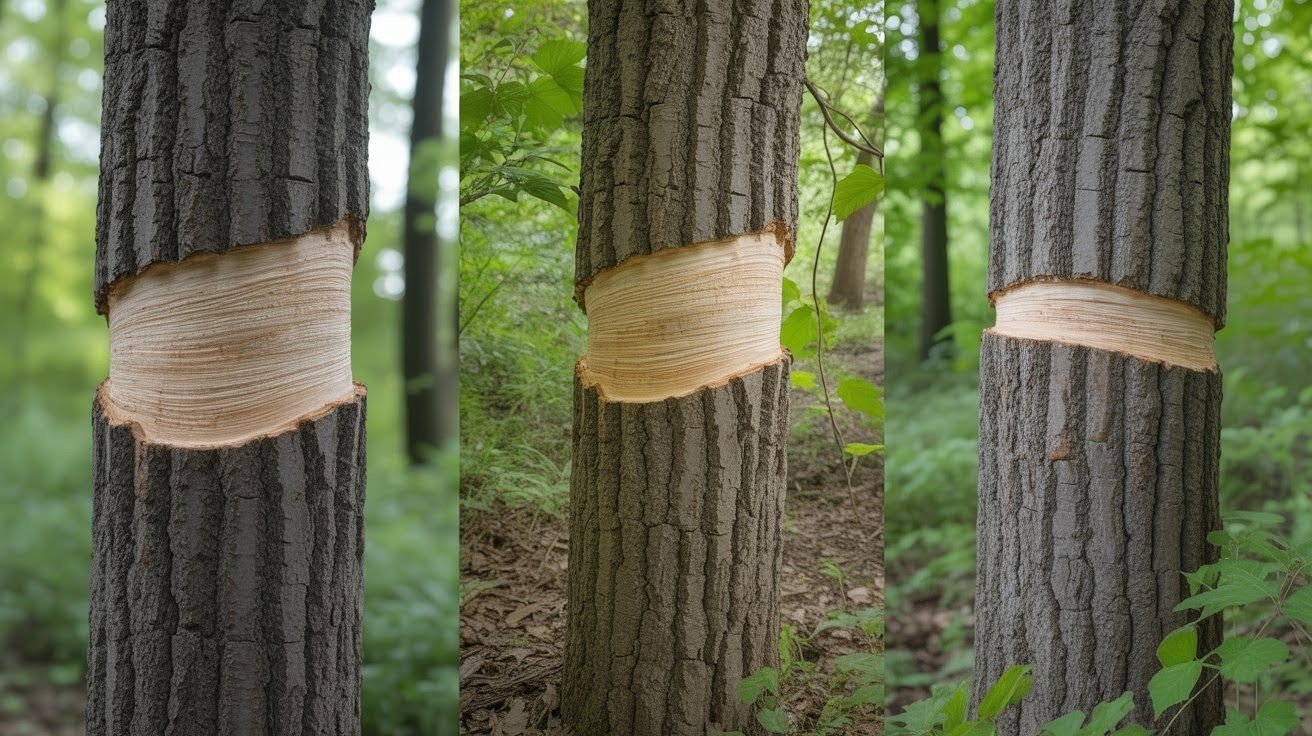
Healthy, vigorous trees produce callus tissue faster than stressed specimens. A well-watered, properly fertilized tree in prime growing conditions can add several centimeters of callus growth per year.
The growing season makes all the difference. Callus formation occurs primarily from spring through early fall when cambium cells actively divide. Winter dormancy halts the process completely.
Wound size relative to tree size affects closure speed dramatically. A five-centimeter wound on a mature oak may seal within five to seven years. The same size wound on a young sapling could take proportionally longer because the tree has less total cambium producing callus.
Chemical Defense Activation
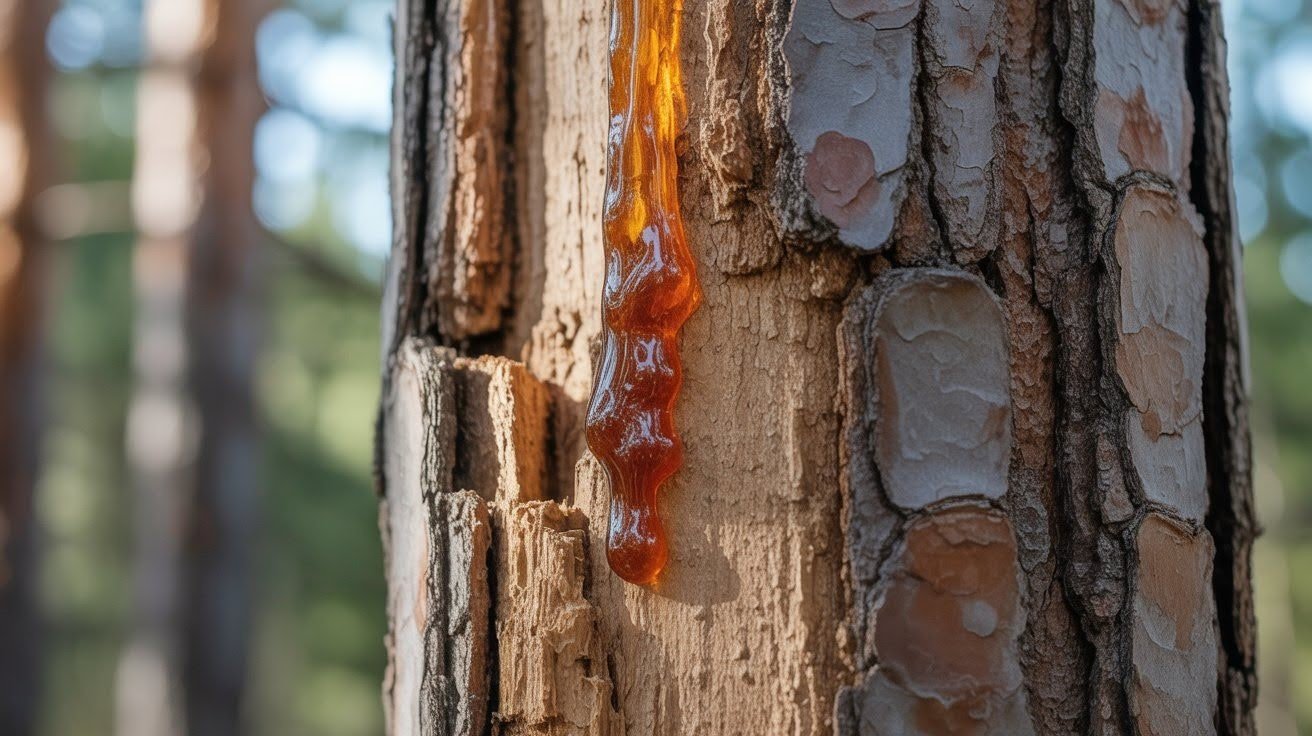
Trees respond to wounding by flooding damaged areas with defensive chemicals. Tannins, phenols, and other compounds create hostile environments for fungi and bacteria. These substances also oxidize exposed wood, creating a darker color.
Some species produce copious resin or gum that physically seals wounds and traps invading organisms. Pines, spruces, and cherries show this response clearly. The sticky secretions harden into barriers that supplement the tree’s structural compartmentalization efforts.
These chemical defenses require significant energy investment. Trees divert resources from growth and reproduction to produce protective compounds, which is why damaged trees often show reduced vigor for several years. The question “Does tree bark grow back?”
Factors That Affect a Tree’s Ability to Recover
Your tree’s chances of surviving bark damage depend on several variables that you need to evaluate carefully.
- Tree Species and Age: Not all trees bounce back the same way. Younger trees often recover faster because they have more active growth and flexible tissues, while older ones take longer due to slower metabolism.
- Extent of Damage: A tree’s recovery largely depends on how severe the injury is. Minor branch loss or small bark wounds might heal on their own, but deep trunk wounds or root damage can disrupt nutrient flow.
- Soil Quality and Nutrition: Healthy soil acts like a strong immune system for trees. Nutrient-rich, well-draining soil supports faster root regeneration and disease resistance.
- Water Availability: Consistent moisture helps trees rebuild tissue and push out new growth. Too little water causes stress, while too much can suffocate roots. I
- Environmental Conditions: Sunlight, temperature, and air quality all influence recovery speed. A tree in a shaded or polluted area might take longer to bounce back than one in open, clean air.
What to Do If Tree Bark Is Missing or Damaged?
Taking appropriate action immediately after noticing bark damage significantly improves your tree’s survival chances.
Assess the Damage
Start by measuring the wound’s extent around the trunk’s circumference. Use a measuring tape or string to determine what percentage of the bark is missing. This single measurement tells you more about survival probability than wound surface area alone.
Check carefully for signs of pest infestation or disease. Look for boring dust (sawdust-like material), holes, fungal growth, or discolored wood. These indicators suggest complications beyond simple mechanical damage.
Document the damage with photos from multiple angles. Include close-ups showing bark edges and exposed wood texture. This record helps you track healing progress over months and years, and provides valuable information.
Clean and Shape the Wound
Use a sharp, clean knife to trim away any loose or torn bark edges. Cut cleanly back to firmly attached bark. Don’t remove more than necessary. The goal is to eliminate ragged tissue that may die back further, not creating a larger wound.
Shape the wound into an ellipse or oval with pointed ends running vertically along the trunk. This shape promotes faster callus closure because growth proceeds most quickly from the sides.
Perform this trimming only once. Repeated cutting or scraping delays healing by continuously injuring new callus tissue. Once you’ve created clean edges, leave the wound alone and let the tree’s natural responses take over. Resist the temptation to “help” further.
Avoid Wound Dressings
Decades ago, arborists recommended painting wounds with tar, paint, or commercial wound dressings. Research has since proven these products don’t help and often harm. They trap moisture against wood, creating ideal conditions for decay organisms rather than preventing infection.
Trees seal wounds most effectively when exposed to air. Natural drying hardens the surface wood and allows defensive chemicals to concentrate. Wound dressings interfere with these processes while providing no barrier against the microscopic fungi and bacteria that cause decay.
The one exception involves certain disease situations where fresh wounds might attract specific pests. For example, oak wilt disease spreads through beetles attracted to the wound scent. In those limited cases, temporary wound paint may be recommended during high-risk periods.
Protect and Support Recovery
Install physical barriers if needed to prevent additional damage. Tree guards around the base prevent mower and trimmer injuries. Fencing keeps deer and other wildlife away from vulnerable bark.
Provide supplemental water during dry periods, especially in the first growing season after injury. Consistent moisture helps the tree maintain vigor while producing callus tissue. Aim for deep, infrequent watering rather than shallow, frequent applications.
Consider light fertilization if soil tests reveal deficiencies, but avoid heavy feeding. Excessive nitrogen promotes succulent growth that attracts pests and diseases. The goal is to support recovery.
When to Call a Professional Arborist
Damage exceeding 25-50% of trunk circumference warrants professional assessment. Arborists can evaluate structural integrity, decay risk, and realistic survival chances. They may recommend support systems, advanced treatments, or careful monitoring protocols that you wouldn’t know how to implement.
Wounds near the tree’s base or root collar deserve immediate expert attention. These low injuries often indicate more extensive root damage or create stability concerns. Arborists have tools to assess internal decay and structural soundness that aren’t apparent from external examination.
Pest or fungal presence complicates simple mechanical wounds significantly. Professional diagnosis identifies specific organisms and appropriate treatment strategies. Some infestations spread rapidly and require aggressive intervention to save the tree or prevent spread to nearby specimens.
Conclusion
When tree bark gets damaged, it doesn’t heal in a way that we are naturally inclined to expect. Different from the regenerative healing you observe in human skin, trees can only cover wounds with callus tissue, never recreating the protective layers of bark that were lost.
Still, a lot of trees live and even prosper for many years despite substantial bark damage. The main factors determining the outcome are the degree of the damage, particularly whether the injury surrounds the trunk.
Keep an eye on the trees that have been injured regularly during the next years. Provide them with good care through watering, protecting them from further damage, and seeking professional advice if necessary. Trees are living assets that are completely.
Frequently Asked Questions
Can tree bark grow back after damage?
Tree bark doesn’t truly grow back after being removed. Trees cannot regenerate lost bark tissue like human skin regenerates after injury. Instead, healthy trees form callus tissue around wound edges that gradually seals over exposed wood.
How long does it take for tree bark damage to heal?
Small wounds on healthy trees may seal in three to five years, while larger injuries can take decades or never fully close. Healing speed depends on wound size, tree species, overall health, and growing conditions.
Will a tree die if the bark is removed all around the trunk?
Yes, complete girdling bark removal around the entire trunk circumference is usually fatal. This severs the phloem layer that transports nutrients between roots and leaves. The tree may survive one season on stored reserves.
What should I put on damaged tree bark?
Don’t apply anything to damaged tree bark. Research shows wound dressings, paints, and tar trap moisture and promote decay rather than preventing it. Clean the wound edges once, then let it air dry naturally.
How can I tell if my tree will survive bark damage?
Measure the damage around the trunk’s circumference. Injuries affecting less than 25% usually heal well, while damage exceeding 50% significantly reduces survival chances. Also consider tree health before injury, species healing characteristics.