
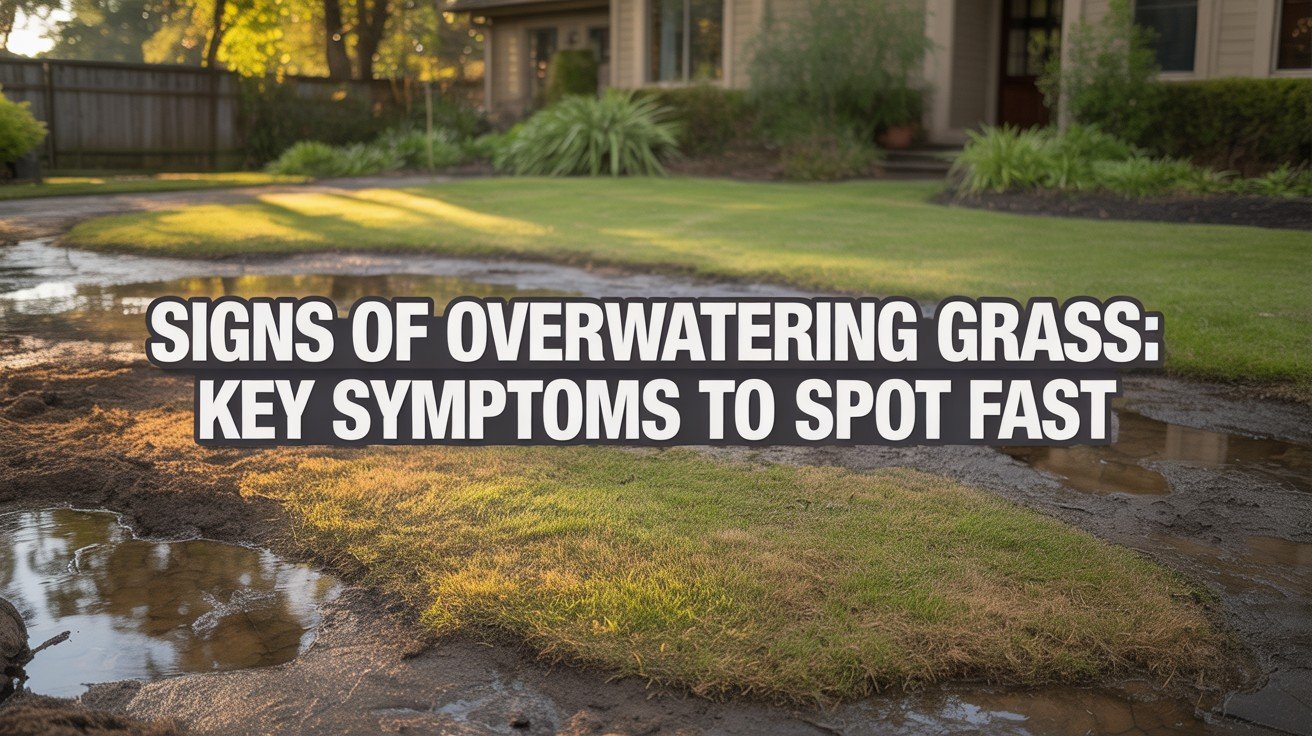
Your yellow grass might be drowning instead of drying out. Many people see a yellow patch and rush to add more water, but that often makes the problem worse. Both too much and too little water can cause the same color change, even though the reasons behind it are very different.
Putting more water on soil that is already soaked only harms the grass. The roots lose air, fungus grows, and the lawn becomes weaker instead of getting better. Checking the soil is the first step before touching the sprinkler.
I have cared for lawns for many years and seen this happen often. Soft, wet soil means too much water. Hard, dry soil means not enough. This guide explains the signs of each problem and how to fix them so you can stop guessing and help your lawn recover.
Key Signs of Overwatering Grass
These symptoms tell you when your lawn is getting too much water. Learn to recognize them early to adjust before the damage gets serious. The more signs you see together, the more certain you can be about overwatering.
1. Soggy or Spongy Soil
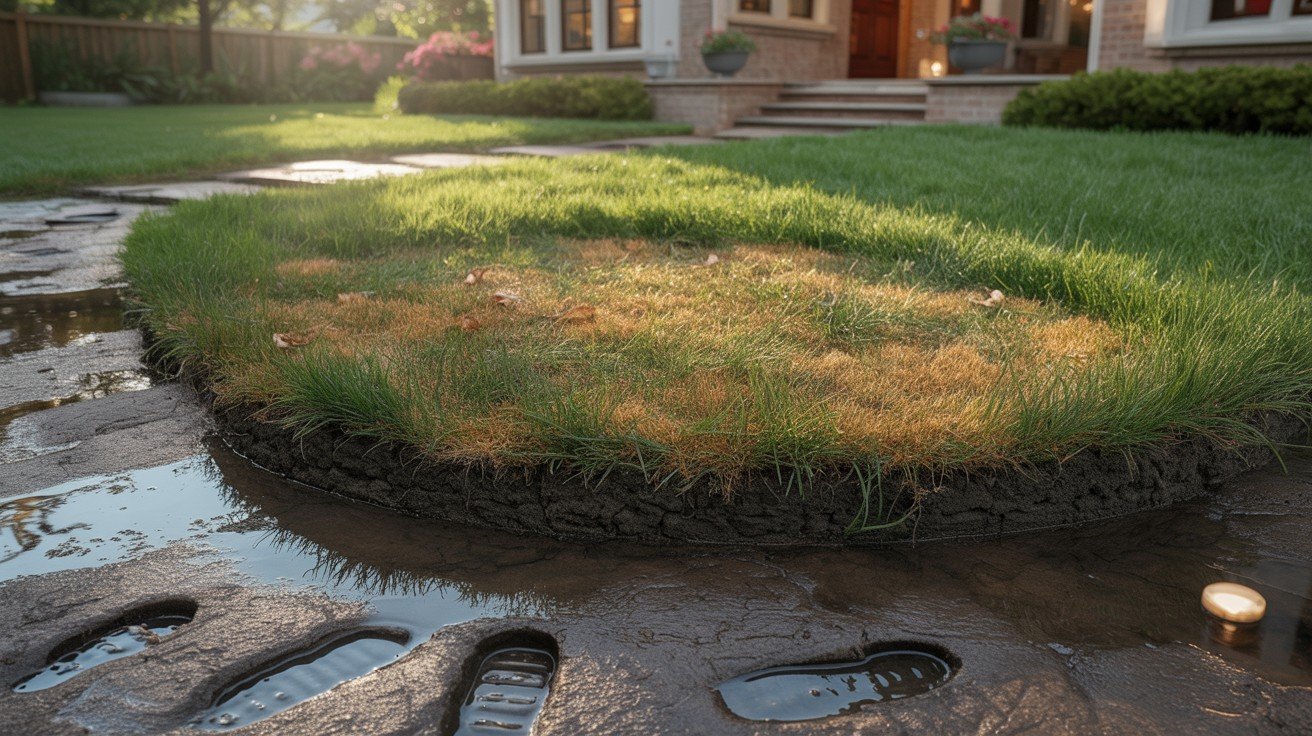
Your soil should feel firm when you walk on it. If it feels soft, squishy, or spongy under your feet, you’re looking at waterlogged ground. This is one of the clearest overwatering signs.
What soggy soil means:
- Soft ground: The soil compresses easily when you step on it. It feels bouncy or unstable.
- Visible footprints: Your shoe prints stay visible in the grass after you walk across the lawn.
- Waterlogged root. The roots are sitting in water instead of soil with air pockets. They can’t breathe properly.
- Poor drainage. Either you’re watering too much, or your soil isn’t draining well. Both need fixing.
Walk your lawn after watering to check this. If your feet sink in or the ground feels mushy, cut back on water immediately. Healthy soil should bounce back quickly after you step on it.
2. Yellowing or Limp Grass
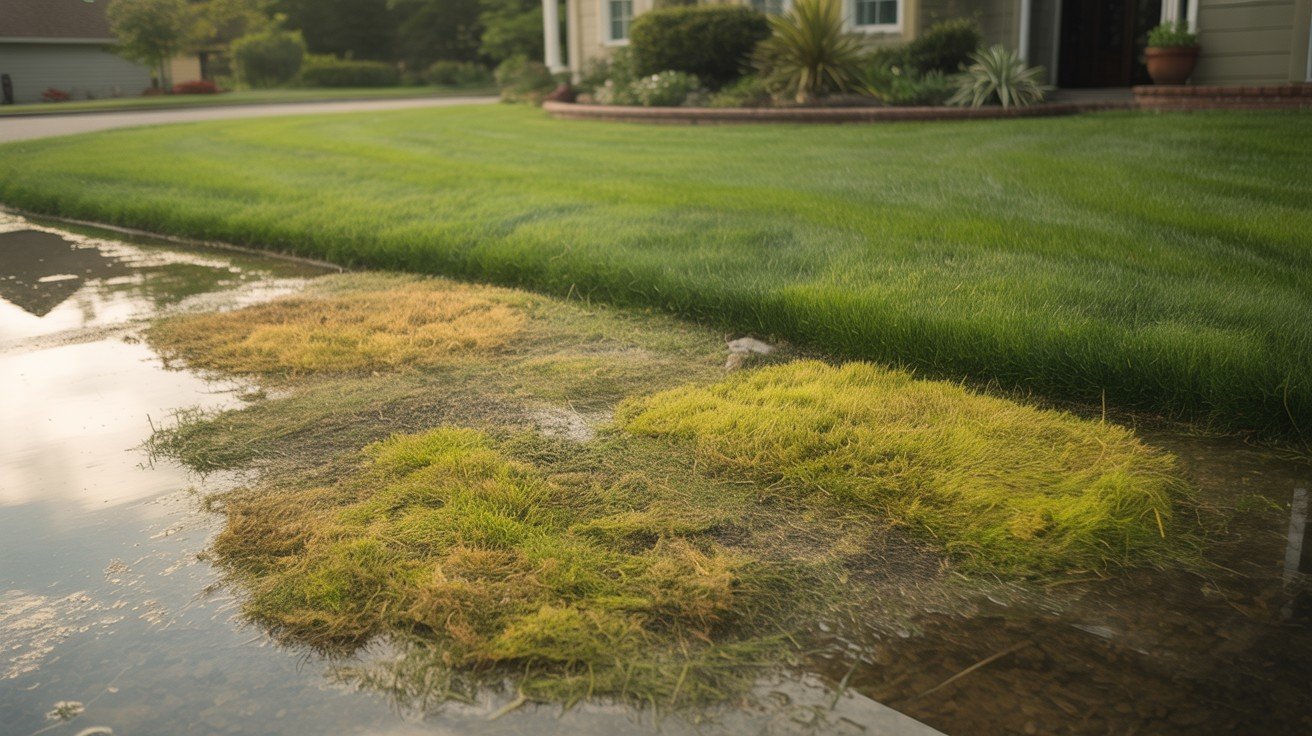
Yellow grass confuses people because it looks like a thirst problem. But when roots drown, they can’t absorb nutrients. The grass turns pale yellow or light green because it’s starving for oxygen.
How to identify this correctly:
- Pale or yellow blades. The grass loses its deep green color and looks washed out.
- Limp texture. Blades lie flat instead of standing upright. They look weak and lifeless.
- Check the soi.l This is critical. Yellow grass with soggy soil means overwatering. Yellow grass with dry, hard soil means underwatering.
Don’t add water based on color alone. I’ve seen countless lawns killed because people watered yellow grass that was already dying. Always check your soil moisture first by pushing your finger into the ground.
3. Puddles or Standing Water
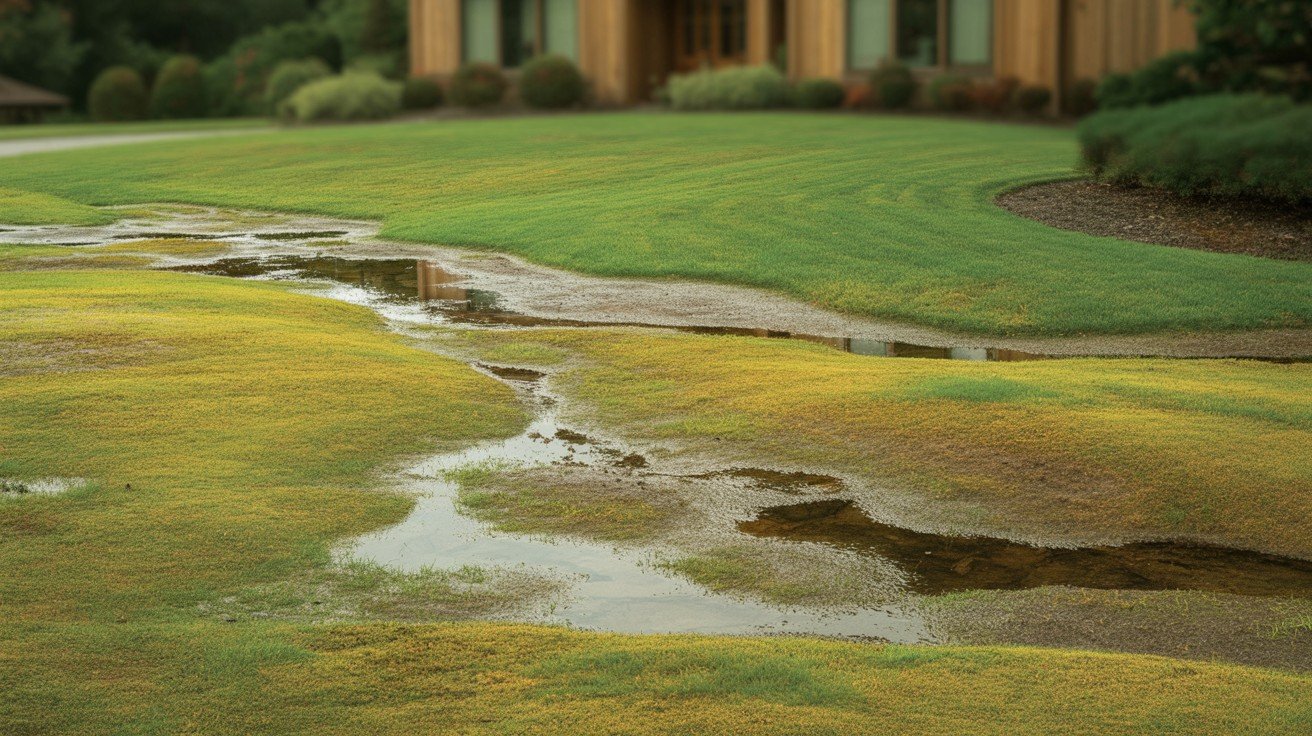
Water should soak into your lawn within an hour or two. If puddles stick around for hours after watering or rain, you’ve got a problem. Either you’re applying too much water or your soil can’t handle what you’re giving it.
What standing water indicates:
- Saturated soil: The ground is holding all the water it can. More water has nowhere to go.
- Compacted ground. Hard, dense soil prevents water from draining down into lower layers.
- Overwatering or poor grading. You’re either watering too long, or your yard doesn’t slope properly for drainage.
Watch your lawn after watering or rain. Puddles that last more than a few hours mean you need to water less or fix drainage issues. Grass roots will rot if they sit in standing water regularly.
4. Fungal Growth and Mushrooms
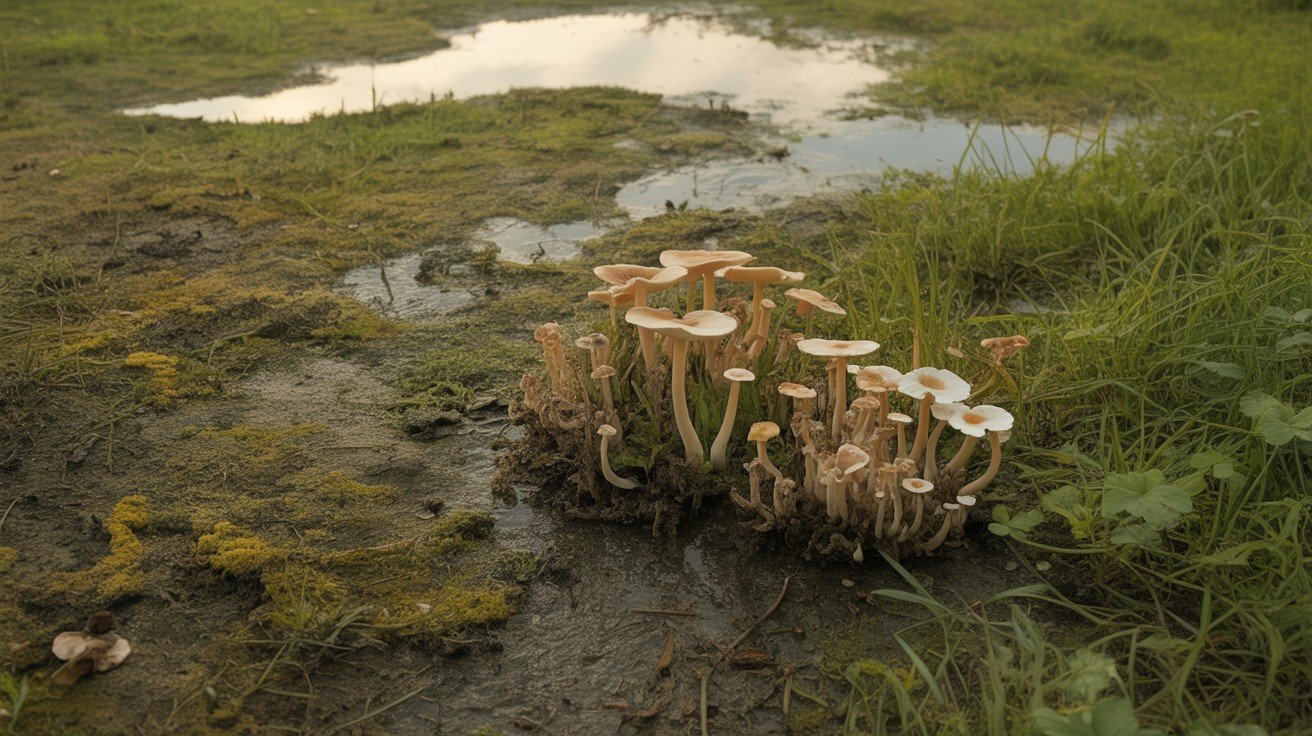
Mushrooms popping up in your lawn are a dead giveaway. Fungi love wet conditions. If you see mushrooms, mold, or slimy patches, your soil is staying too wet for too long.
Signs of fungal problems:
- Mushrooms: Small or large mushrooms appear, especially in shady, damp spots.
- Mold patches: White, gray, or brown fuzzy growth on grass blades or soil surface.
- Slimy area: Parts of the lawn feel or look slimy to the touch.
- Musty smell. The lawn smells like mildew or rot instead of fresh grass.
Fungi spread fast in wet lawns. Once they establish themselves, they’re hard to eliminate. The solution starts with reducing water. No fungicide works long-term if you keep the soil soaking wet.
5. Lawn Diseases

Too much moisture creates perfect conditions for grass diseases. Brown patch, dollar spot, rust, and powdery mildew all thrive when grass stays wet. These diseases show up as discolored patches across your lawn.
Common disease symptoms:
- Brown patch: Circular brown areas that can spread quickly, especially in warm, humid weather.
- Dollar spots:t Small tan or straw colored spots about the size of a silver dollar.
- Rus,t Orange or yellow powder on grass blades that rubs off on your hands.
- Powdery mildew: White or gray powdery coating on grass, usually in shaded areas.
These diseases damage or kill grass if left unchecked. The first step in treatment is always reducing water. You can’t cure lawn disease while keeping the grass constantly wet. Let the soil dry out between waterings.
6. Weed Invasion
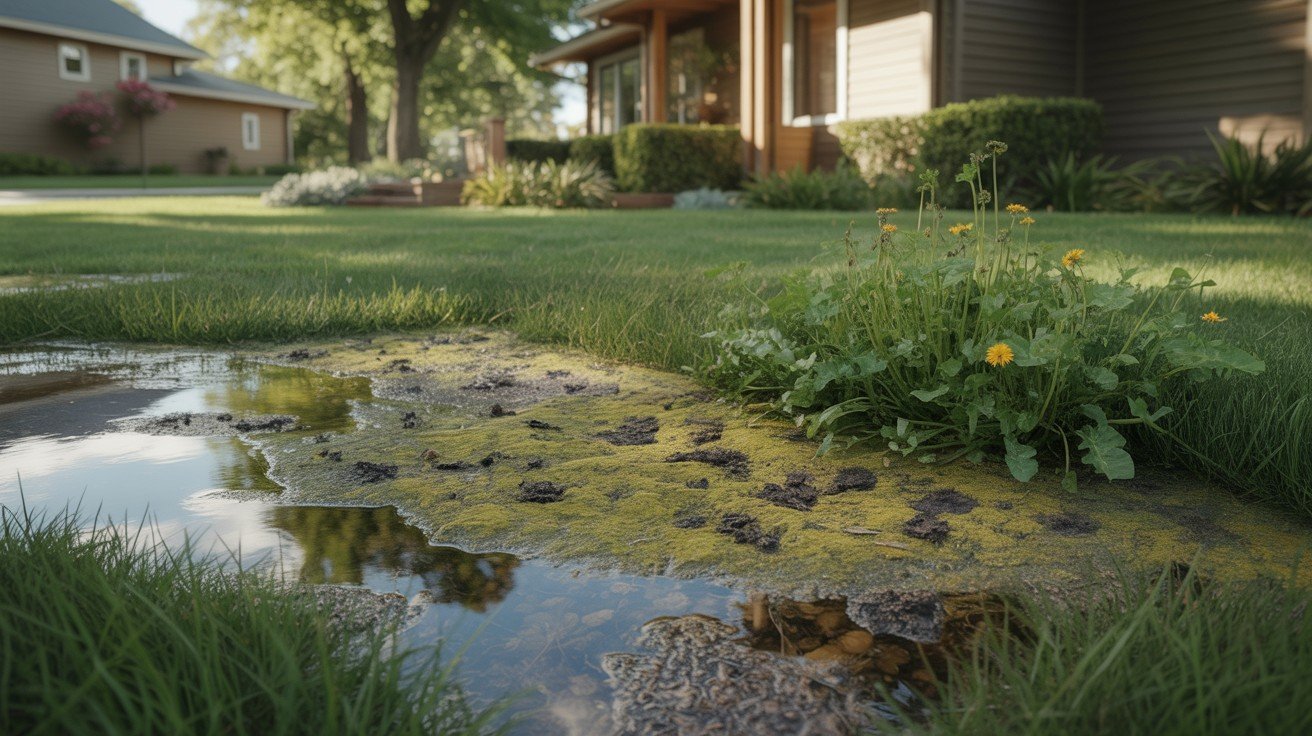
Certain weeds love wet soil and will take over an overwatered lawn. If you suddenly see more weeds than usual, especially moisture-loving types, your watering schedule might be the cause.
Weeds that indicate too much water:
- Crabgrass spreads quickly in wet, weak lawns during summer.
- Nutsedge Tall, grass-like weed with triangular stems that thrives in soggy areas.
- Annual bluegrass Light green weed that loves cool, wet conditions.
- Buttonweed is a low-growing weed with small white flowers that spreads in moist lawns.
Healthy grass crowds out weeds naturally. When you overwater, your grass weakens, and weeds move into the empty spaces. Reducing water helps your grass grow stronger and compete better against invaders.
7. Pest Activity
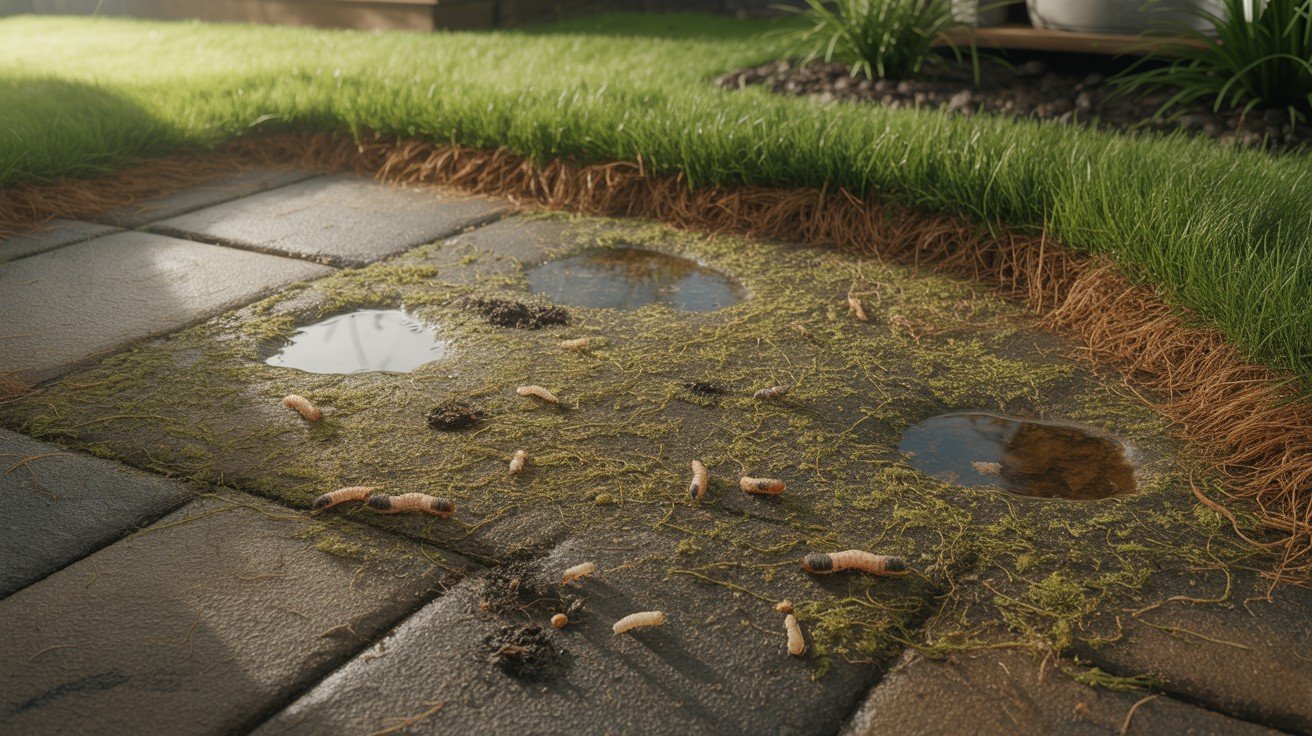
Wet lawns attract pests that damage grass and make your yard unpleasant. Insects and other creatures move into areas with consistent moisture. Some feed on grass roots, while others just make your lawn gross to use.
Pests drawn to wet soil:
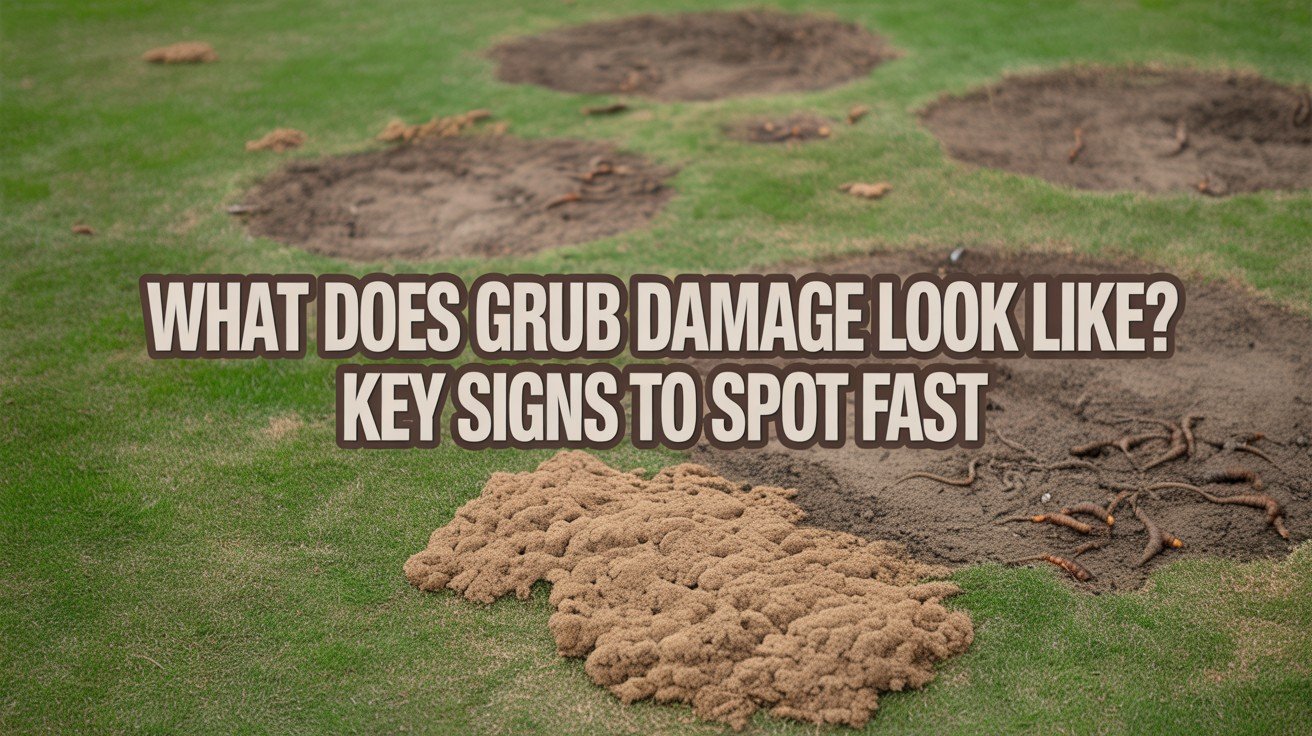
- Grubs are White larvae that eat grass roots and create brown, dead patches.
- Mosquitoes breed in standing water and damp areas.
- Fleas thrive in moist, shaded spots and can infest pets and homes.
- Termites are attracted to moisture near homes, posing structural risks.
- Chinch bugs and cutworms both damage grass and prefer moist conditions.
Pest problems often start with watering issues. Letting your lawn dry out between waterings makes it less attractive to these creatures. You’ll spend less on pest control if you fix the moisture problem first.
8. Thatch Buildup
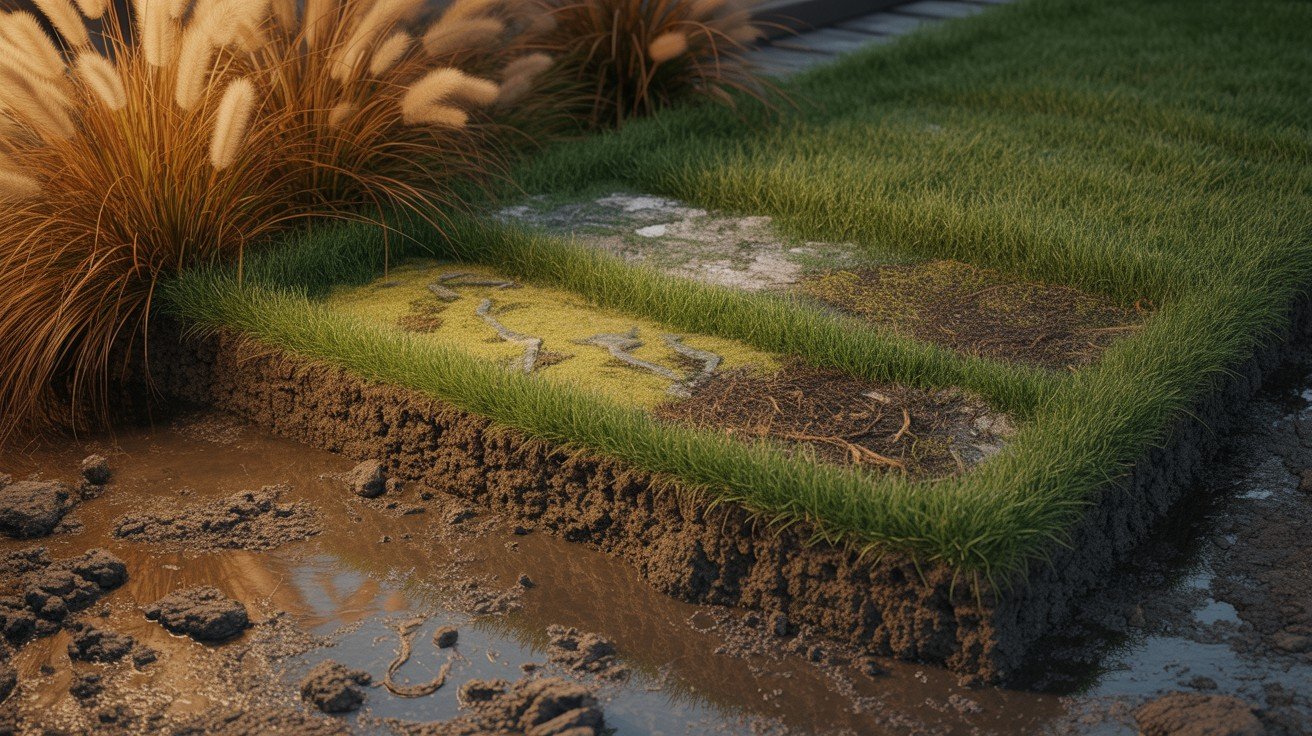
Thatch is the layer of dead grass and roots between the soil and green grass. A thin layer is normal and helpful. But it blocks water, air, and nutrients from reaching roots when it gets thicker than half an inch.
Signs of excess thatch:
- Spongy feel. The lawn feels bouncy when you walk on it, but not from wet soil. The bounce comes from the thick thatch.
- Visible layer: You can see a brown matted layer when you pull back grass blades.
- Water runs off. Water doesn’t soak in well because thatch acts like a barrier.
- Weak grass Roots stay shallow because they can’t penetrate the thatch to reach the soil.
Overwatering contributes to thatch buildup. Too much water encourages shallow root growth and rapid decomposition problems. Core aeration and dethatching help, but you need to reduce watering, or the thatch will return quickly.
9. Slow or Stunted Growth
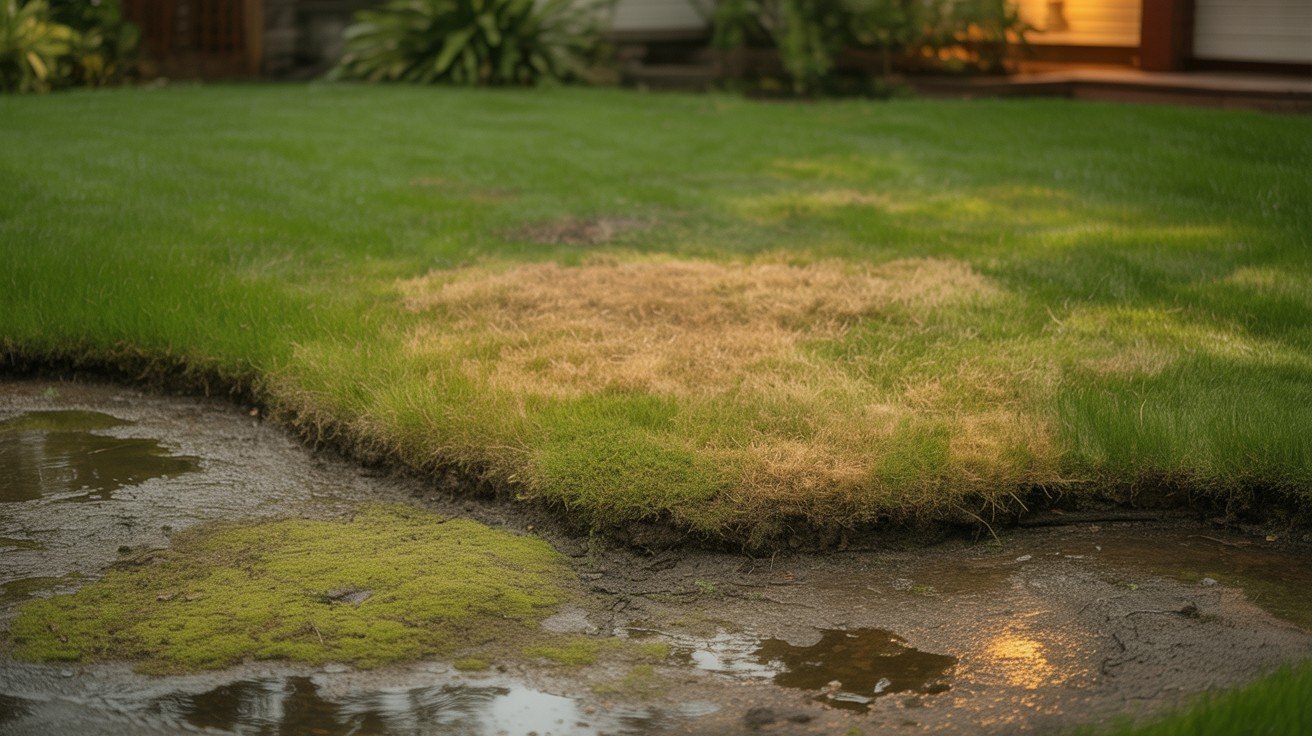
Overwatered grass grows slowly or stops growing entirely. This seems backward since plants need water to grow. But too much water washes nutrients away and suffocates roots.
What stunted growth looks like:
- Thin, sparse gras.The lawn doesn’t fill in properly. You see more soil than you should.
- Short weak blades. Grass doesn’t grow tall even during the growing season.
- No response to fertilizer. You add nutrients, but the grass doesn’t improve or green up.
- Nutrient deficiency sign: Yellow patches or pale color despite proper feeding.
Roots need oxygen to absorb nutrients. When soil stays saturated, roots can’t function properly even if nutrients are present. Cut back on water, and you’ll often see growth improve within a few weeks.
How to Confirm If Your Lawn Is Overwatered?
Don’t guess about your watering problem. These simple tests tell you exactly what’s happening in your soil. Take five minutes to check before you adjust your watering schedule.
Soil Moisture Tests
Testing your soil directly gives you the most accurate answer. You need to know what’s happening below the surface, not just what the grass looks like. These tests are simple and require no special equipment.
How to test soil moisture:
- Soil probe: Push a probe or long screwdriver 6 to 8 inches into the ground. Pull it out and check for moisture along the shaft. Wet soil at that depth means you’re overwatering.
- Screwdriver test:t Take a regular screwdriver and push it into your lawn. If it slides in with almost no resistance, the soil is too wet. If you have to force it or it won’t go in, the soil is too dry. It should push in with moderate effort.
- Feel the soil:t Dig up a small sample of soil from 3 to 4 inches down. Squeeze it in your hand. If water drips out or the soil stays in a muddy ball, it’s too wet. If it crumbles and won’t hold together, it’s too dry. Properly moist soil should hold its shape briefly, then break apart.
Do these tests in different spots across your lawn. Some areas might drain better than others. Test in the morning before watering to see how well your soil is drying between waterings.
Visual & Physical Clues
Your lawn shows obvious signs when it’s getting too much water. You don’t need to be an expert to spot these. Walk your lawn and look for these clear indicators.
What to look for:
- Soft, spongy surface. Step on your lawn. If it feels like walking on a wet sponge or your feet sink in, the soil is waterlogged.
- Water pooling. Run your sprinklers for 10 to 15 minutes. If water pools on the surface or takes more than an hour to disappear, you’re applying too much water or have drainage problems.
- Mushrooms or algae. These only grow in consistently wet conditions. If you see them, your lawn is staying too moist.
These signs are hard to miss once you know what to look for. I’ve walked onto hundreds of lawns and can tell within seconds if overwatering is the problem just by how the ground feels and what’s growing on it.
Compare With Underwatering Signs
Underwatered lawns look similar at first glance but feel completely different. The key is touching your soil and grass, not just looking at color. Physical texture tells you the truth.
Underwatering looks like this:
- Dry, crunchy grass: Blades feel brittle and may break when you bend them. Overwatered grass feels limp and soft.
- Footprints that stay: When grass lacks water, the blades don’t spring back up after you step on them. But the soil underneath feels hard and dry, not soft and wet.
- Hard, compacted soil: You can barely push a screwdriver into dry, compacted soil. Overwatered soil lets tools slide in easily.
- Gray or blue: Severely dry grass turns grayish or bluish before it turns yellow. Overwatered grass turns a pale yellow.
The soil test is the fastest way to tell the difference. Stick your finger or a screwdriver into the ground. Wet and squishy means too much water. Hard and dry means too little. Once you feel the difference, you’ll never confuse the two again.
Common Causes of Overwatering
Understanding why overwatering happens helps you prevent it. Most people don’t intentionally drown their lawns. These common mistakes lead to too much water without you realizing it.
- Daily watering schedules run sprinklers every day when most lawns only need water 2-3 times per week. This floods the soil and suffocates the grass roots.
- Broken or misaligned sprinkler heads flood one area while leaving others dry. Check your system monthly for double coverage and adjust as needed.
- Poor drainage and compacted soil prevent water from penetrating. It runs off or pools on the surface, leaving the grass sitting in soggy conditions.
- Evening watering keeps the grass wet overnight for 8-12 hours. This creates perfect conditions for fungus and disease. Water between 4 AM and 10 AM instead.
- No rain sensors means systems keep running during storms. Install a rain sensor to automatically skip watering when rain has fallen.
How to Fix an Overwatered Lawn?
Fixing an overwatered lawn starts with stopping the damage. Then you address the consequences and prevent it from happening again. Follow these steps for the best recovery.
1. Stop Watering Temporarily
The first step is always the same: turn off the water. Your lawn needs time to dry out and recover. Roots need oxygen, and they can’t get it while sitting in saturated soil.
How long to stop watering:
- Let the soil dry for 3 to 7 days: The exact time depends on your weather, soil type, and how badly the lawn was overwatered.
- Check the soil daily: Push a screwdriver into the ground. When it takes moderate effort to push in, your soil is ready for water again.
- Watch the grass: It should perk up as the soil dries. If it starts looking truly dry and stressed, you can resume light watering.
- Don’t panic if the grass looks bad at first: It takes time for roots to recover. Resist the urge to water just because the grass isn’t instantly green. Let the soil dry properly before starting any watering schedule.
2. Improve Drainage
If water pooled or your soil stayed soggy for days, you have a drainage problem. Stopping the water temporarily helps, but the issue will return unless you fix how water moves through your soil.
Drainage solutions:
- Aerate your lawn: Use a core aerator to pull plugs of soil. This creates channels for water and air to reach deeper soil layers. Do this once or twice per year for compacted lawns.
- Add organic matte. R top: dress with compost after aerating. This improves soil structure over time and helps with drainage.
- Fix grading issues: Fill low spots where water collects. Make sure your yard slopes away from buildings.
- Install drainage: For serious problems, you may need French drains or catch basins to redirect water.
- Aeration is the easiest fix most homeowners can do themselves: Rent a core aerator from a hardware store for about $75 per day. One session can make a noticeable difference in how your soil handles water.
3. Address Fungal or Pest Problems
Overwatered lawns attract fungi and pests that damage grass. Once you’ve stopped overwatering, you need to deal with the secondary problems it caused. Ignoring these issues means your lawn won’t recover properly.
How to handle damage:
- Treat fungal diseases early: Apply fungicide to affected areas according to package directions. Common products include azoxystrobin or propiconazole for brown patch and dollar spot.
- Monitor for grub: Look for brown patches that peel back like carpet. Apply grub control if you find more than 5 to 10 grubs per square foot.
- Watch for chinch bugs: These tiny insects cause irregular yellow patches in sunny areas. Insecticidal soap or pyrethroid treatments work if caught early.
- Eliminate standing water: Mosquitoes breed in any water that sits for more than a few days. Fix drainage to remove their breeding sites.
- Don’t use chemicals as your first solution: Fix the watering problem first. Many pest and disease issues disappear on their own once the soil dries out and the grass strengthens.
4. Clear Excess Thatch
Thick thatch blocks water, air, and nutrients from reaching the grass roots. If your lawn feels spongy or you can see a thick brown layer when you pull back the grass, you need to remove it.
How to remove thatch:
- Measure thatch depth: Pull back the grass and look at the brown layer between the green grass and the soil. Anything over half an inch needs removal.
- Dethatch in spring or fall: Use a dethatching rake for small areas or rent a power dethatcher for larger lawns.
- Rake up debris: The process pulls up a lot of dead material. Bag it and remove it from your lawn.
- Aerate after dethatching: This helps recovery and prevents thatch from building up again quickly.
- Dethatching is hard work, but necessary for badly overwatered lawns: The thatch won’t go away on its own. Once removed, proper watering practices will keep it from returning to problem levels.
5. Adjust Sprinklers
Your irrigation system might be causing uneven watering without you realizing it. Broken heads, poor coverage, and timing issues all contribute to overwatering. Fix these problems to prevent future damage.
What to check and fix:
- Walk your system while it runs: Look for heads that spray onto driveways, stick in one position, or create mist instead of proper spray.
- Replace broken heart: Stuck or damaged sprinkler heads are cheap to replace but cause expensive lawn damage.
- Adjust coverage: Make sure each area gets watered once, not twice, from overlapping zones.
- Check for leaks: Look for constantly wet spots or unusually high water bills.
- Install a rain sensor: These shut off your system automatically when it rains.
- Set proper run times: Most zones only need 15 to 20 minutes, not 30 to 45 minutes.
- Fixing your sprinkler system prevents the same problems from happening again: I recommend checking your system at the start of each season and after any heavy storms that might knock heads out of alignment.
When to Call a Lawn Care Professional?
Most overwatering problems you can fix yourself. But some situations are beyond typical homeowner solutions. Knowing when to call a professional saves you time, money, and a dead lawn.
Call a professional for:
- Severe fungal outbreaks: If the disease is spreading rapidly across large areas despite reducing water and applying fungicide, you need expert treatment.
- Persistent pooling despite adjustments: Water that won’t drain even after you’ve stopped watering and aerated the lawn indicates serious drainage problems.
- Major pest invasion: Large-scale grub damage, chinch bug infestations, or other pest problems that cover significant portions of your lawn.
- Extensive bare patches or dead turf: If more than 30 percent of your lawn is dead or dying, professional restoration is more efficient than DIY reseeding.
- These problems escalate quickly if ignored: A small fungal patch can take over your entire lawn in weeks. Drainage issues can damage your home’s foundation. Don’t let pride or cost concerns stop you from getting help when you actually need it.
Conclusion
You now know the main signs of giving your grass too much water. Soft soil, yellow spots, mushrooms, and patches of fungus all point to excess moisture. The most helpful check is the soil itself. Wet and spongy ground means too much water, while hard and dry ground means the opposite.
You also have simple steps to fix the issue. Pause watering for a short time, improve drainage if needed, adjust your sprinkler schedule, and give the lawn deeper but less frequent watering. With steady care, your grass can bounce back.
If you have questions about your lawn, feel free to ask. I reply to all comments. And if this helped you solve a watering problem, share it with someone who may need it.
Frequently Asked Questions
What are the main signs of overwatering grass?
Soggy or spongy soil, yellowing grass, standing water or puddles, mushrooms growing in the lawn, fungal diseases like brown patch, increased weeds such as nutsedge, pest activity including grubs, thick thatch buildup, slow grass growth, and bare or patchy spots throughout the lawn.
How can I tell if my grass is overwatered or underwatered?
Check the soil. Overwatered grass has soft, soggy soil that feels spongy when walked on. Underwatered grass has hard, dry, compacted soil. Both can show yellow color, but the soil texture tells you which problem you have. Use the screwdriver test to confirm.
How often should I water my lawn to prevent overwatering?
Water 1 to 2 times per week, not daily. Aim for 1 inch of water total per week, including rainfall. Water deeply each session to encourage deep root growth. Early morning, between 6 am and 10 am, is the best time to water your lawn.
Can an overwatered lawn recover?
Yes, most overwatered lawns recover once you stop watering and let the soil dry out. Stop watering for 3 to 7 days, improve drainage through aeration, treat any fungal diseases or pests, and adjust your watering schedule. Severely damaged areas may need reseeding.
Why does overwatered grass turn yellow?
Overwatered grass turns yellow because waterlogged soil lacks oxygen. Roots suffocate and cannot absorb nutrients properly, causing the grass to become pale yellow or light green. The grass is essentially starving despite water and nutrients being present in the soil.