
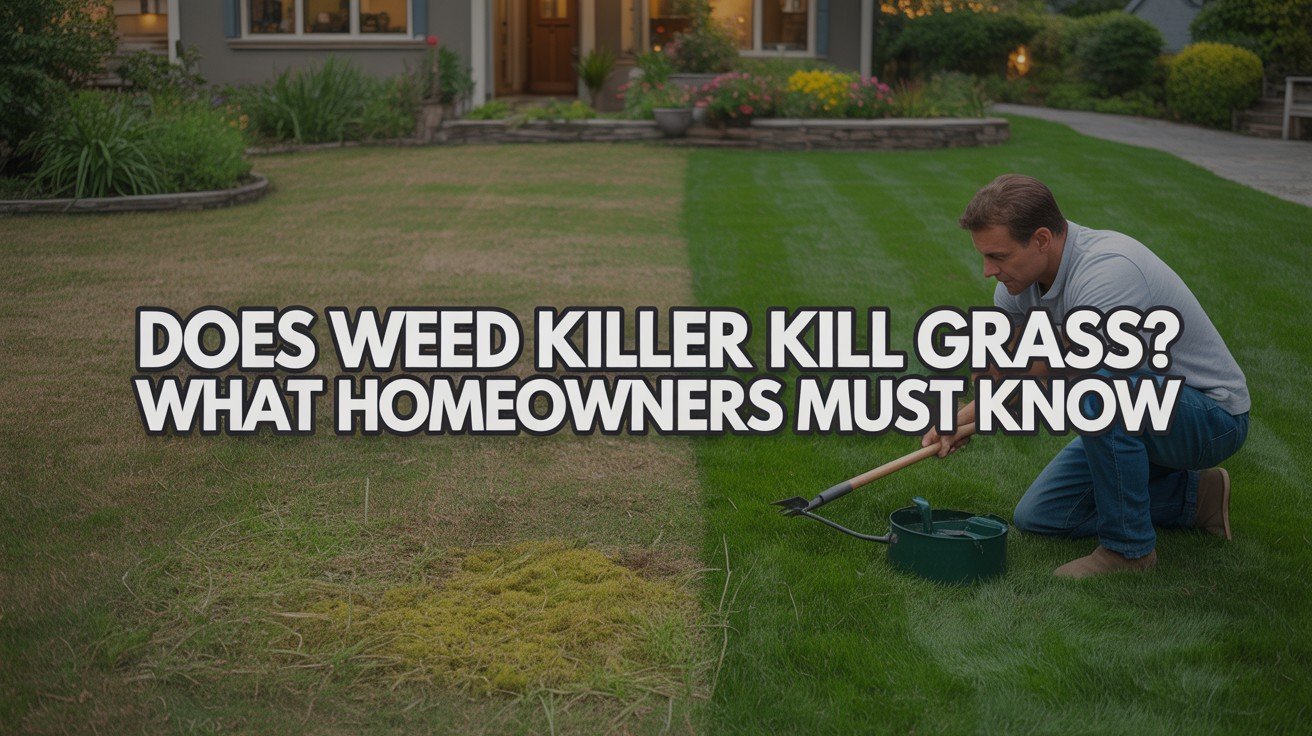
Yes, weed killer can harm grass, but it does not have to. Many people grab the first bottle they see without knowing what it contains, and one wrong choice can turn a small weed problem into damaged turf.
The confusion often comes from brands that sell different products under almost the same name. Regular Roundup harms any plant it touches, while Roundup For Lawns targets weeds and leaves the grass in place. The bottles look alike, which leads to simple but costly mistakes.
I have worked in lawn care for many years and seen this happen often. This guide explains how these products work, which ones are safe, and what to do if your lawn has already been damaged. You will know exactly what to buy and how to use it with confidence.
Can Weed Killer Kill Grass?
Yes, weed killer can kill grass. But it doesn’t have to. The key is knowing which product you’re using and how it works.
Why Some Weed Killers Harm Grass?
Nonselective herbicides kill everything they touch. They don’t care if it’s a weed or your beautiful lawn.
Take Roundup, for example. The main ingredient is glyphosate. It’s not grass-safe. Spray it on your lawn, and you’ll see problems fast. Here’s what happens:
- Your grass turns yellow
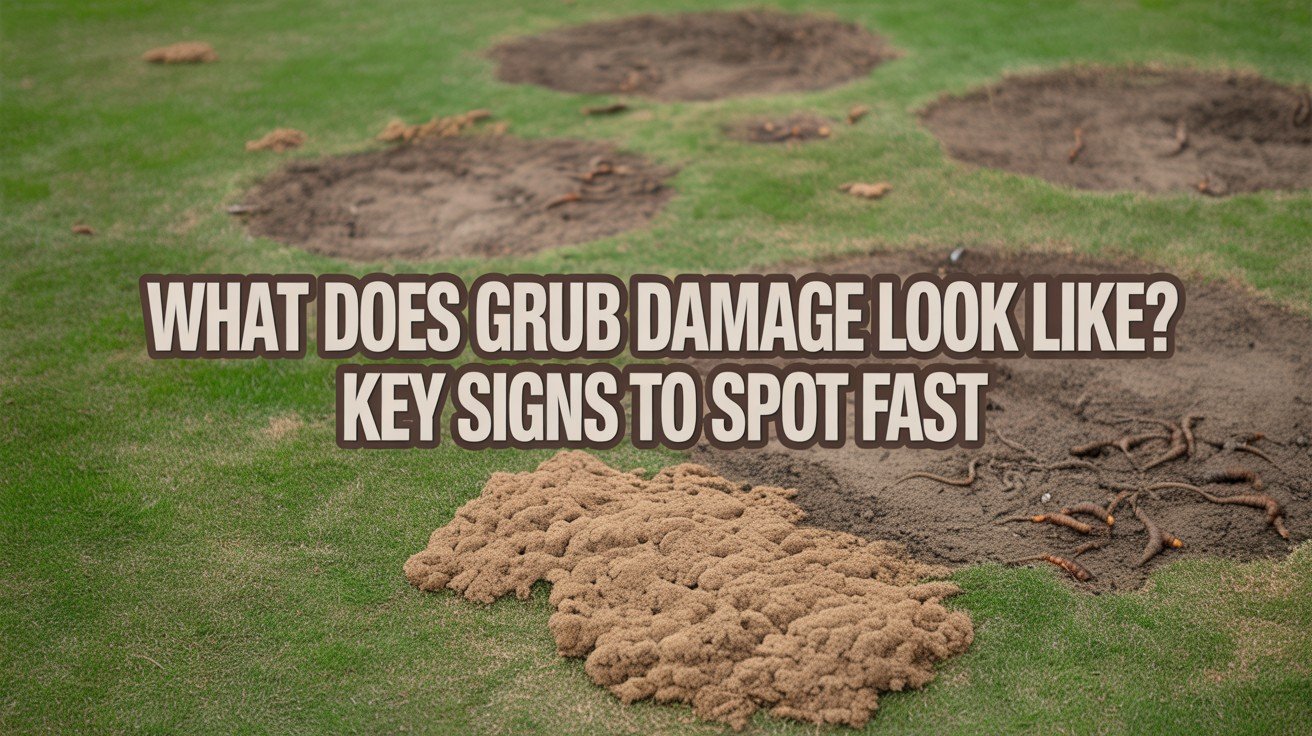
- Brown patches appear
- Plants die off completely
Any green plant in the spray zone is at risk. That includes your turf. I’ve seen homeowners accidentally kill large sections of their yard this way. It’s not pretty.
Why Some Weed Killers Do NOT Harm Grass?
Selective herbicides are your friend. They target broadleaf weeds while leaving your grass alone.
These products use special ingredients like dicamba, quinclorac, and MCPA. They work because weeds and grass are built differently. The herbicide recognizes those differences. It attacks the weed’s structure and how it processes chemicals. Your grass? It stays safe.
Think of it like this: selective herbicides know the difference between the bad guys and the good guys. They’re designed to protect turf while taking out dandelions, clover, and other common lawn weeds. That’s why most lawn care products are selective; they let you fix your weed problem without starting over from scratch.
Types of Weed Killers and How They Affect Grass
Not all weed killers work the same way. Understanding the differences will save your lawn. Let me break down what you need to know.
Selective Herbicides
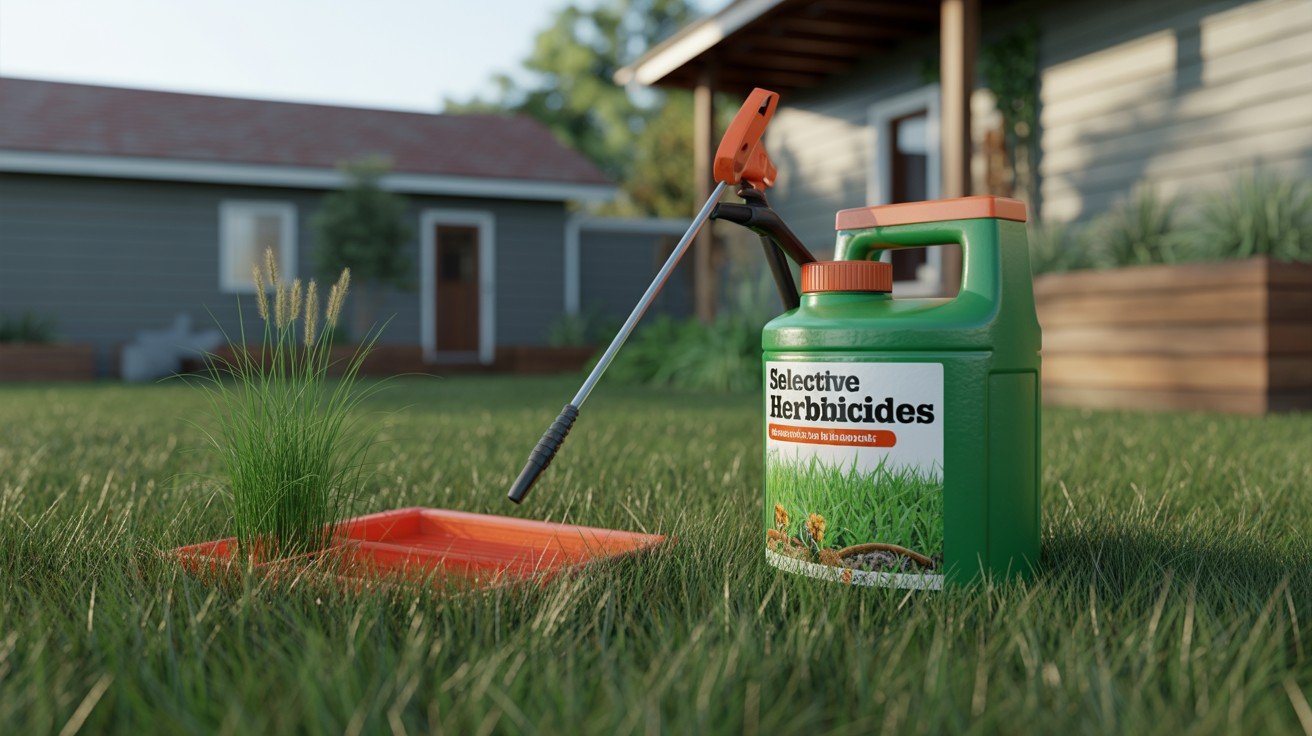
These are made specifically for lawns. When you follow the label directions, they’re safe for your grass.
Most selective products target broadleaf weeds like dandelions and clover. But some also work on problem grasses. Here’s what they handle:
- Crabgrass
- Nutsedge
- Other invasive grass types
I always recommend selective herbicides for active lawns. They let you spot-treat problem areas without damaging the good turf around them. Just read the label to make sure it’s safe for your specific grass type.
Nonselective Herbicides
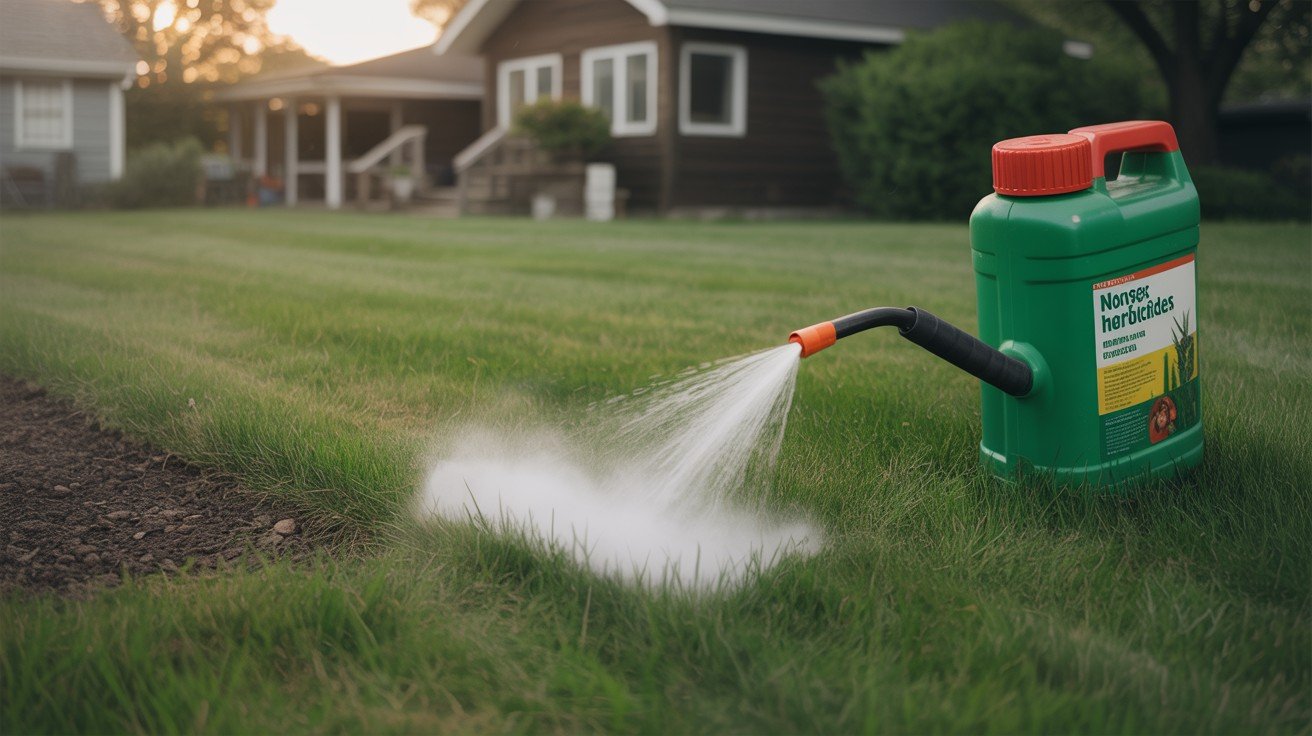
These products kill everything green. Grass, weeds, flowers; it doesn’t matter.
You should never spray nonselective herbicides on your lawn. They’re meant for areas where you want nothing to grow. Think driveways, sidewalk cracks, and gravel paths. Some homeowners use them for large clearing projects or careful spot-killing.
Keep them away from your turf. Even a small amount of drift can create dead patches. I’ve seen people ruin their lawns by using the wrong product. Save nonselective herbicides for hardscapes only.
Pre-Emergent vs Post-Emergent Herbicides
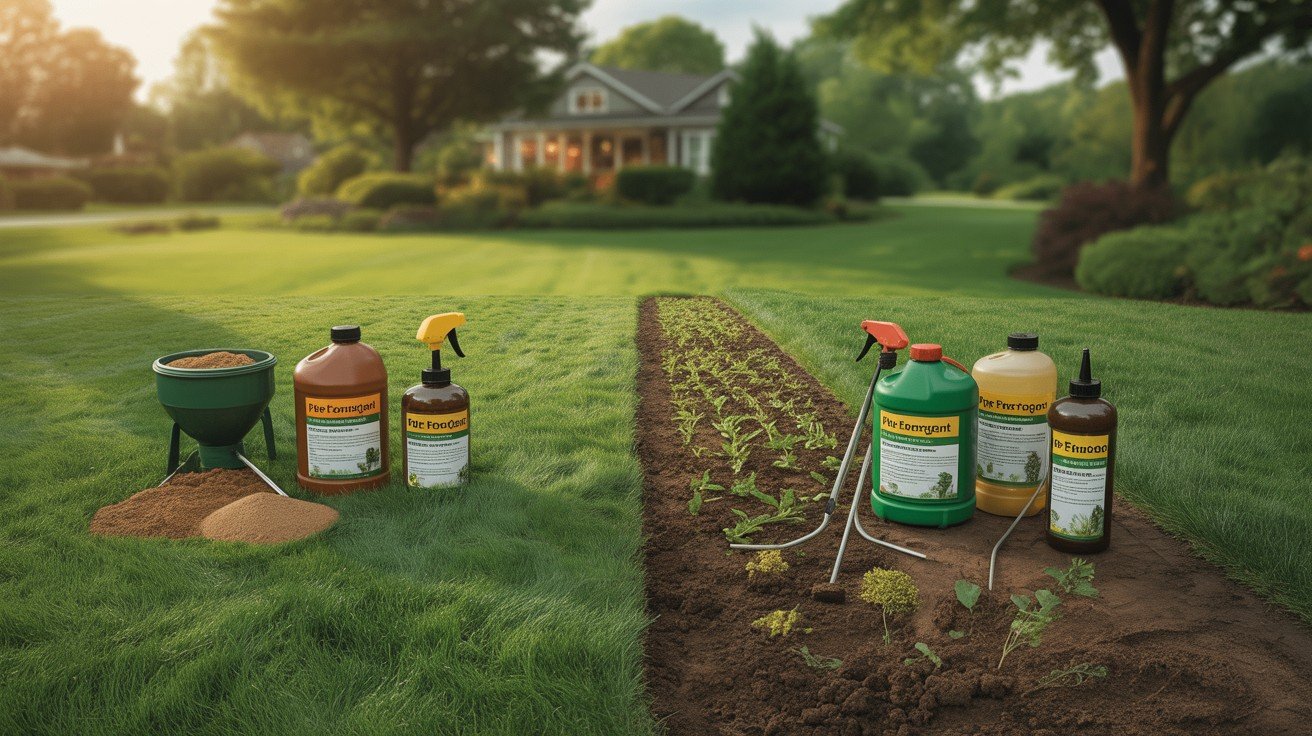
Pre-emergent herbicides stop weeds before they start. They create a barrier in the soil that prevents weed seeds from sprouting.
Post-emergent herbicides are different. They kill weeds you can already see. You spray them directly on the problem plants. Here’s the key difference:
- Pre-emergent = prevention (stops seeds)
- Post-emergent = treatment (kills active weeds)
Timing matters with both types. Apply pre-emergent in early spring before weeds wake up. Use post-emergent when you spot weeds growing. Many homeowners need both throughout the season.
Contact vs Systemic
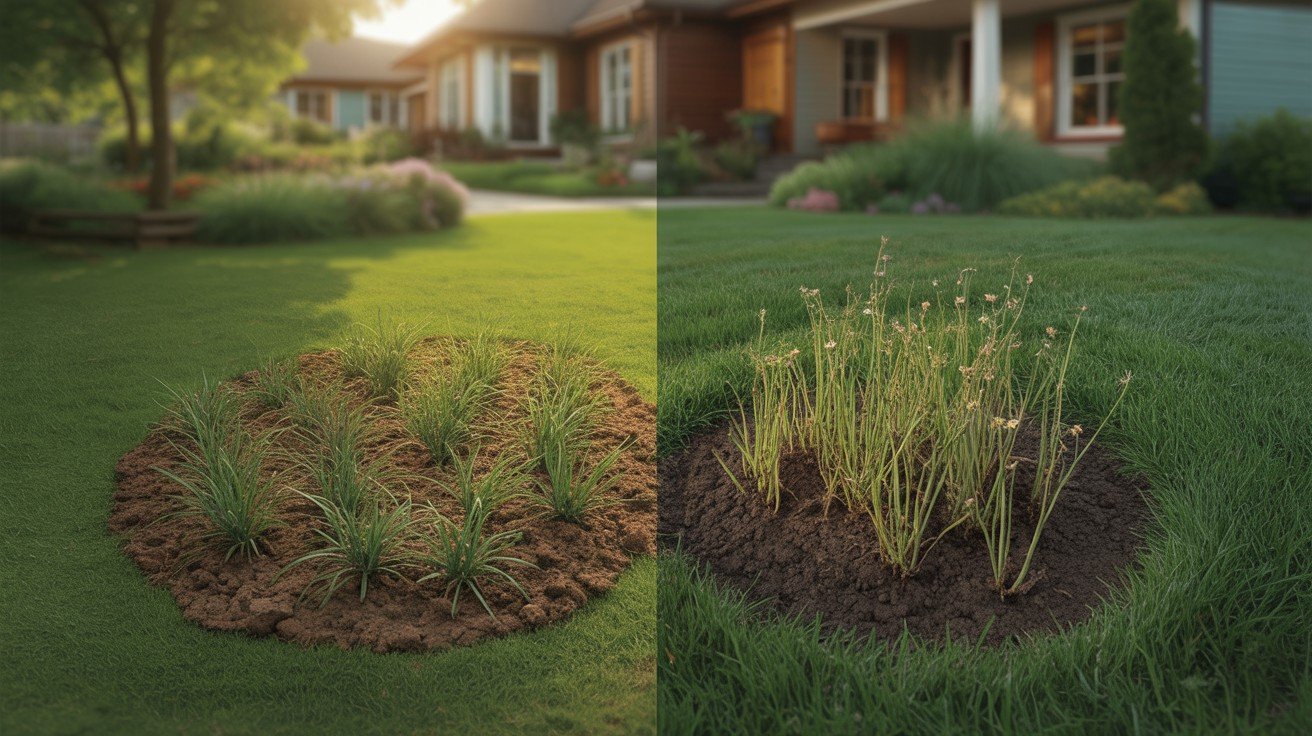
Systemic herbicides work differently. They soak into the plant and move down to the roots. This kills the entire weed from the inside out. The difference is simple:
- Contact = fast results, might need repeat treatments
- Systemic = slower but kills the whole plant
I prefer systemic herbicides for tough weeds. They take longer to work, sometimes up to two weeks. But they actually solve the problem instead of just hiding it. Contact sprays work great for quick cosmetic fixes before guests arrive.
Why does Grass Sometimes die after Weed Killer?
Even grass-safe products can cause damage. The problem usually isn’t the herbicide; it’s how you use it.
Misuse or Overapplication
Using too much product will burn your grass. More isn’t better with herbicides.
I see this mistake all the time. People think extra spray means faster results. Wrong. Here’s what happens instead:
- Grass blades turn brown
- Patchy dead spots appear
- Uneven application creates striped damage
Always follow the label directions exactly. Measure carefully and spray evenly. Your grass can only handle what it’s designed to handle.
Wrong Product Choice
Product names confuse people. One wrong choice destroys your lawn.
Take Roundup as an example. Standard Roundup will kill your entire lawn. But Roundup For Lawns is grass-safe. See the problem? Same brand, totally different results.
- Standard Roundup = kills everything.
- Roundup For Lawns = safe for turf
Read the label before you buy. Look for words like “lawn safe” or “selective.” If it says “vegetation killer,” keep it off your grass.
Poor Timing
Stressed grass can’t handle herbicides. Heat and drought make everything worse.
Your lawn is already fighting to survive during tough conditions. Adding chemicals on top creates a disaster. Timing matters:
- Hot weather (above 85°F) = increased injury risk
- Drought stress = weak, vulnerable grass
- Newly seeded areas = too fragile for treatment
Wait for cooler, mild days. Your grass should look healthy and well-watered before you spray. I never treat lawns during heat waves or dry spells.
How to Tell If Your Grass Was Damaged by Weed Killer?
Herbicide damage has specific warning signs. Knowing what to look for helps you act fast.
Visible Symptoms
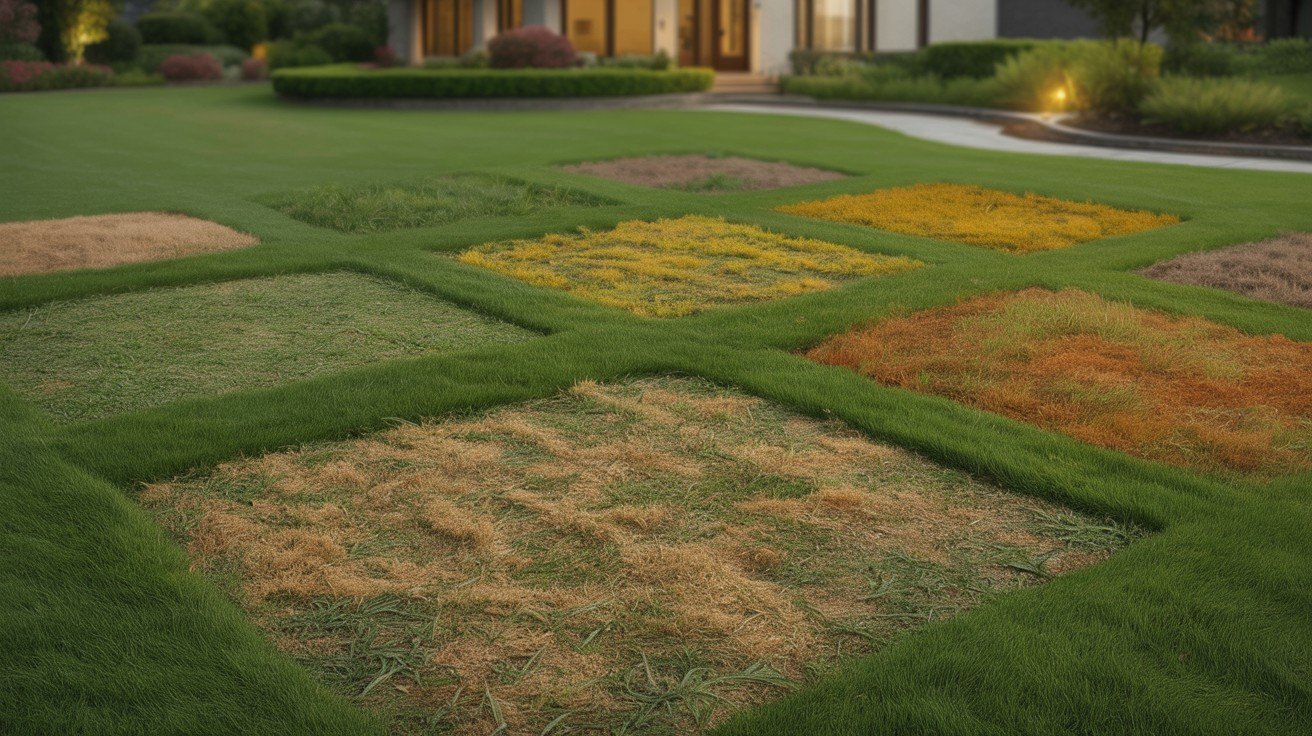
Your grass will show distress within days. The signs are hard to miss.
Watch for these red flags:
- Yellowing blades
- Curling or twisted grass
- Stunted or slow growth
- Brown patches
- Completely dead spots
The damage usually shows up where you sprayed. If you recently used weed killer and now see these symptoms, you have your answer.
Distinguishing Factors
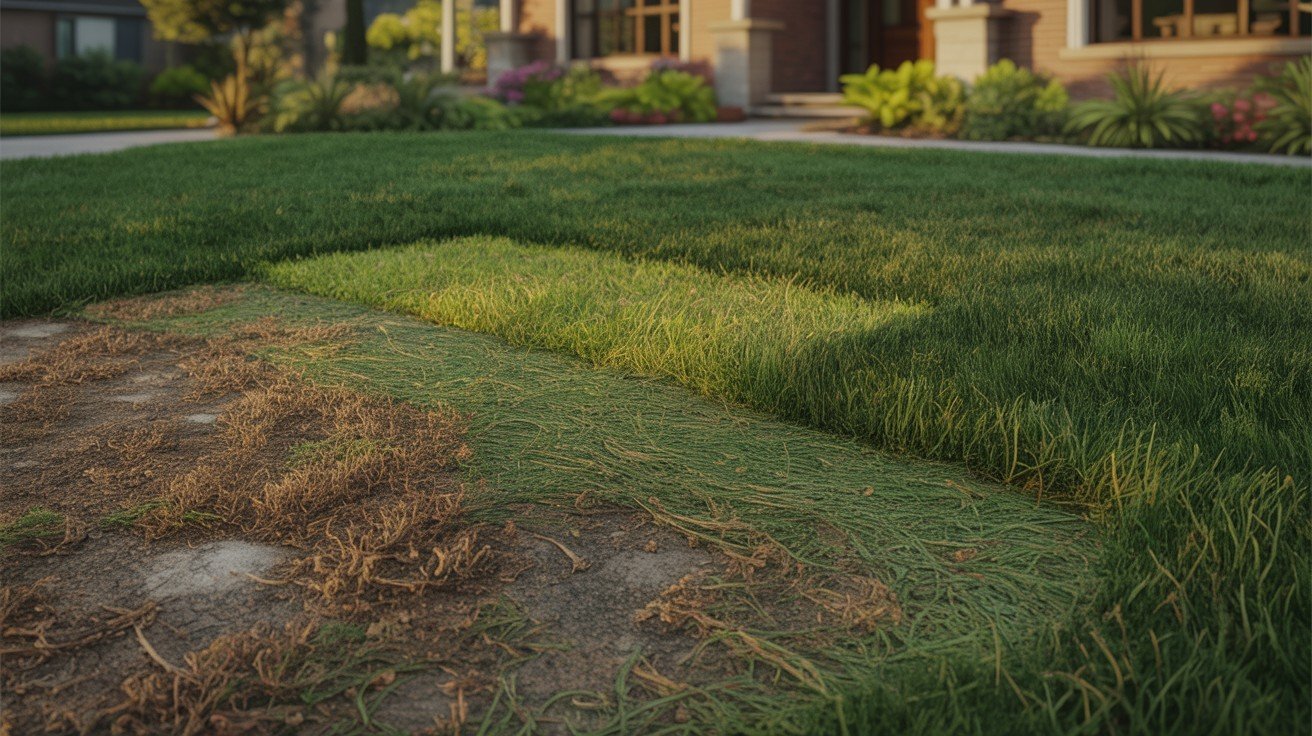
Not all lawn problems come from herbicides. Other issues look similar but have different patterns.
Nutrient deficiencies cause yellowing across the entire lawn. It’s widespread and uniform. Disease creates irregular patches with fuzzy edges or rings. Herbicide damage follows your spray pattern: straight lines, specific spots, or wherever you walked with the sprayer.
Pre-emergent products cause a different problem:
- They don’t kill existing grass
- They stop new grass seed from sprouting
- You’ll see bare spots where seed won’t grow
Look at the pattern and timing. If problems appeared right after you sprayed, the herbicide is likely the cause. If your whole lawn turned yellow slowly over weeks, think of nutrition or disease instead.
How to Avoid Killing Grass When Using Weed Killer
Prevention is easier than fixing dead grass. Follow these steps to protect your lawn.
Pick the Correct Product
The right herbicide makes all the difference. You need to match the product to your specific weed problem.
Don’t just grab what’s on sale. Look at the active ingredients on the label. Brand names don’t tell you enough. Here’s what matters:
- Identify your weed type first
- Check if the product targets that weed
- Confirm it’s labeled as lawn-safe
I always read the fine print. Two products might look similar but work completely differently. One protects your grass, the other kills it.
Follow Usage Instructions
The label is there for a reason. Ignoring it causes most lawn disasters.
Mix the product exactly as directed. Don’t guess the measurements. Timing matters too; spray when conditions are right:
- Apply on calm days (no wind)
- Avoid temperatures above 85°F
- Water your lawn the day before
- Never spray before rain
Wind is your enemy. Even a light breeze can carry herbicide onto the grass you’re trying to protect. Wait for still, mild weather.
Keep Your Lawn Healthy
Healthy grass can handle herbicides better. Weak, stressed turf is vulnerable.
A strong lawn has deeper roots and thicker blades. It bounces back from chemical stress. Your grass needs:
- Regular watering
- Proper mowing height
- Adequate fertilization
- Good soil conditions
Think of it like this: a healthy person fights off illness better. Your grass works the same way. Strong turf tolerates treatment. Weak grass dies easily.
How to Fix Grass Damaged by Weed Killer?
Don’t panic if you see damage. You can save your lawn with the right steps.
Mild Damage
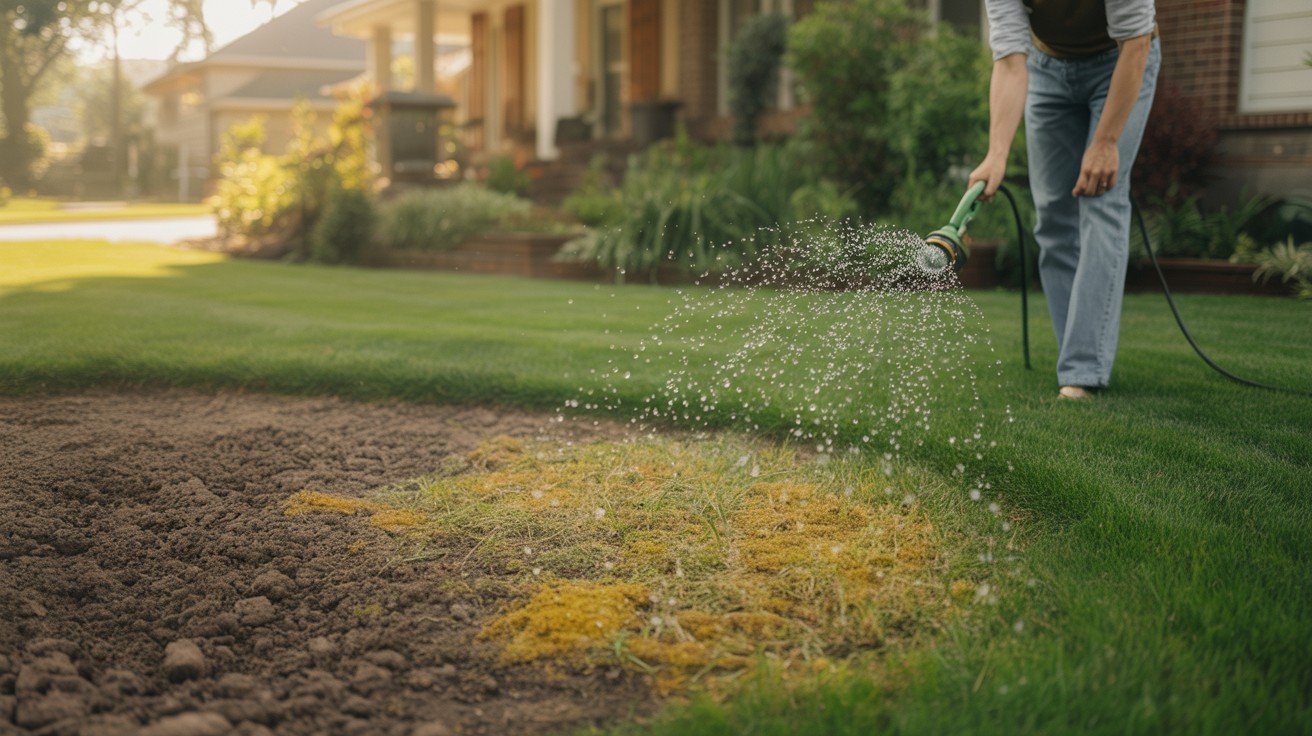
Water deeply right away. This helps flush chemicals out of the soil.
Soak the damaged area thoroughly. You want the water to reach deep into the ground. Here’s what to do:
- Water for 20-30 minutes
- Repeat daily for the first week
- Watch for signs of recovery
Give it time. Grass that’s only slightly damaged can bounce back in 2-3 weeks. Keep watering and wait.
Moderate or Severe Damage
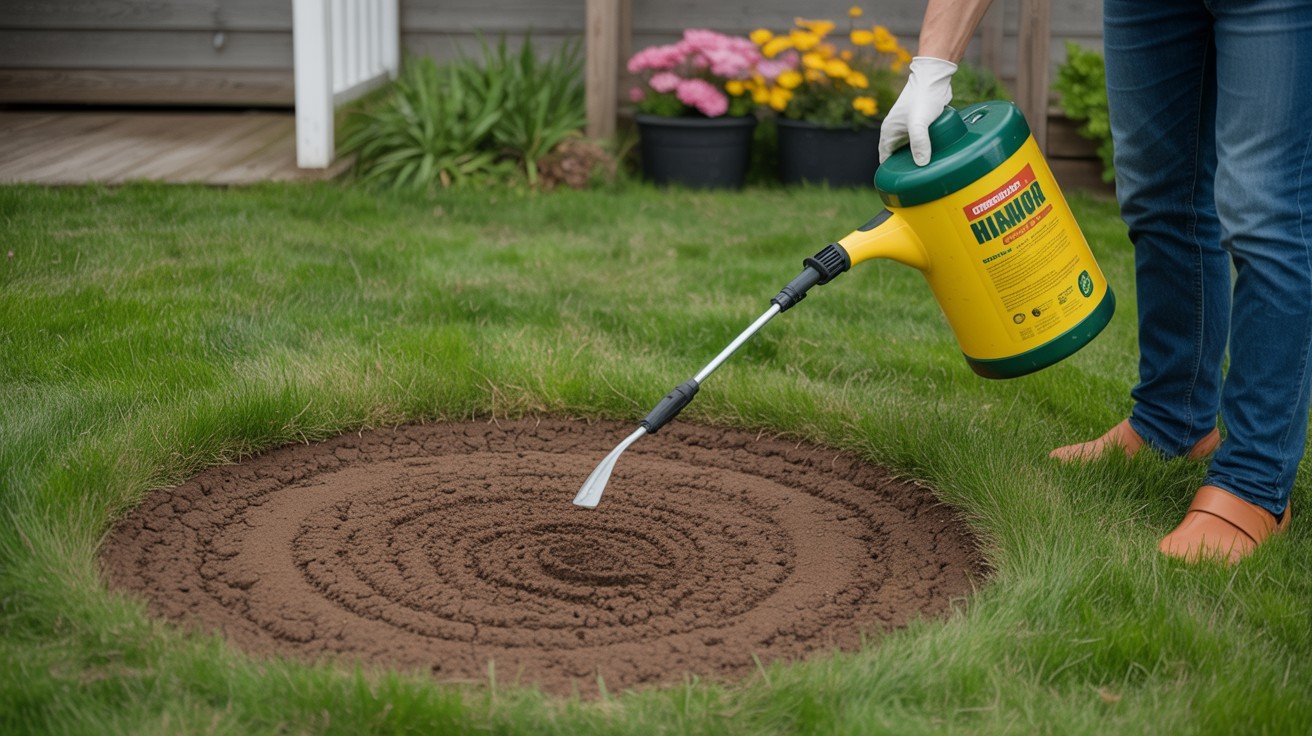
Dead grass needs to be replaced. You’ll have to reseed the bare spots.
First, check your product label for the waiting period. Most herbicides require you to wait 2,4 weeks before seeding. Don’t rush this step; leftover chemicals will kill new seeds:
- Wait the full time listed on the label
- Remove dead grass
- Loosen the soil with a rake or aerator
- Spread quality grass seed
- Water lightly twice a day
Focus on soil health, too. Aerate compacted areas to help roots grow. Water properly; not too much, not too little. Add compost if your soil is of poor quality. Strong soil grows strong grass faster.
Conclusion
So, does weed killer harm grass? It depends on the product and how it is used. Some formulas are made to keep your lawn safe while removing weeds, while others harm every plant they touch. Reading the label and applying it at the right time makes a big difference.
Healthy grass is far more tolerant of treatments. With steady watering, regular feeding, and proper mowing, your lawn grows thick and strong. This helps it fight off weeds on its own and recover faster if it does get stressed.
If your lawn is already damaged, you can still bring it back. Deep watering helps with minor issues, and reseeding works for more serious spots once the waiting period has passed. If you have questions, feel free to ask. And if this helped, share it with someone facing the same weed problem.
Frequently Asked Questions
Can I use Roundup on my lawn without killing the grass?
Standard Roundup kills all plants, including grass. However, Roundup For Lawns is formulated to be grass-safe. Always check the product label carefully. Look for terms like “lawn safe” or “selective herbicide” before applying anything to your turf.
How long after applying weed killer can I reseed my lawn?
It depends on the product. Most herbicides require waiting 2-4 weeks before seeding. Check your product label for the specific waiting period. Seeding too early will kill new grass because chemicals remain active in the soil.
Will weed killer damage grass if it rains after application?
Most herbicides need 4-6 hours to dry and absorb into weeds. Rain before this window can wash away the product, reducing effectiveness. It won’t typically damage grass more than intended, but you may need to reapply for proper weed control.
What’s the safest weed killer for lawns with pets and kids?
Selective herbicides labeled as lawn-safe are generally safe once dry. Natural options like corn gluten meal or manual removal eliminate chemical exposure. Always keep pets and children off treated areas until completely dry, usually 24 hours.
Why is my grass yellow after using weed killer?
Yellowing indicates herbicide damage from overapplication, wrong product choice, or treating stressed grass. Water deeply to dilute chemicals. If the grass was healthy before treatment, it should recover in 2-3 weeks. Severe damage may require reseeding.