
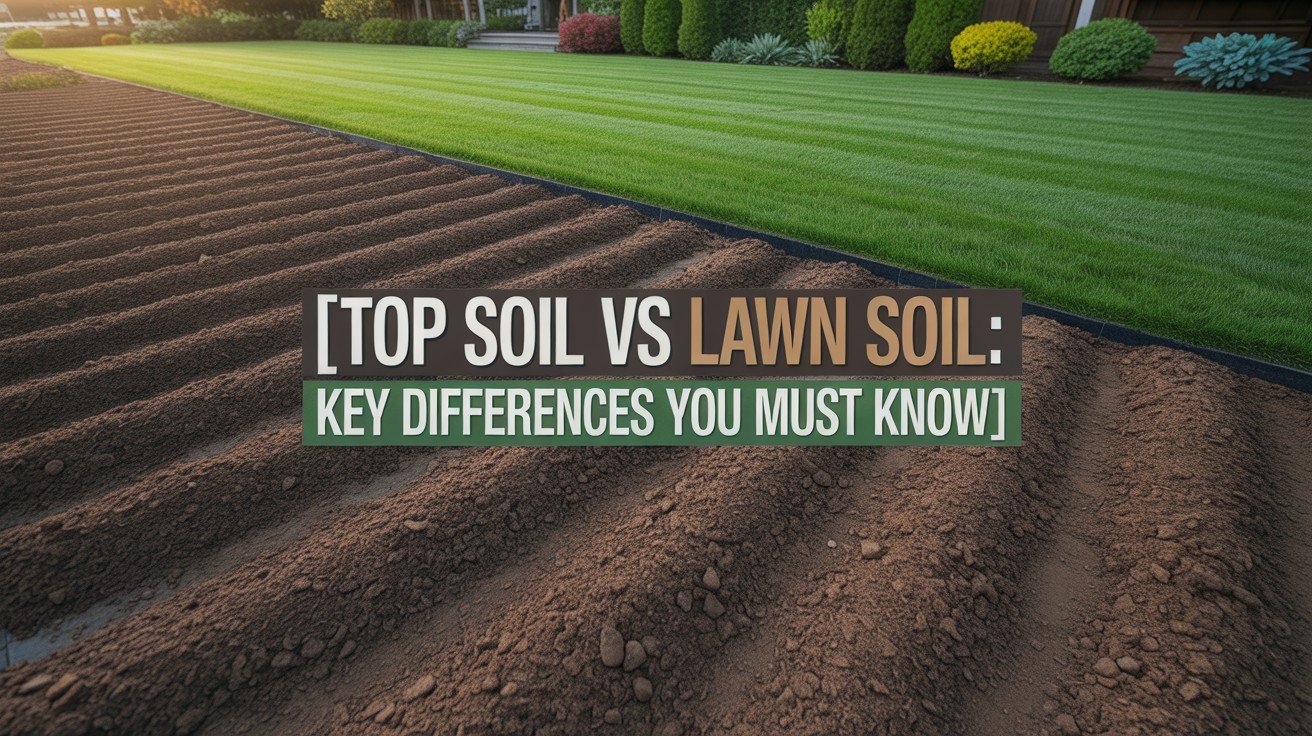
You might stand in a garden center looking at bags of soil that seem identical. Topsoil, lawn soil, and garden soil all look the same at first glance, but they serve very different purposes. Picking the wrong one can set your lawn back before the grass even grows.
Many people assume topsoil and lawn soil are interchangeable, but they are made for different tasks. The wrong choice can slow growth, block water movement, and create problems that show up long after planting. Good soil supports drainage, nutrients, and strong roots.
This guide breaks down what each soil type contains, when you should use them, how they can be mixed, and why testing your soil makes a big difference. By the end, you will know exactly what your yard needs, and you will not have to guess again.
Understanding the Basics of Top Soil vs Lawn Soil
These two soils serve completely different purposes. Let me break down what each one actually is.
What Is Lawn Soil?
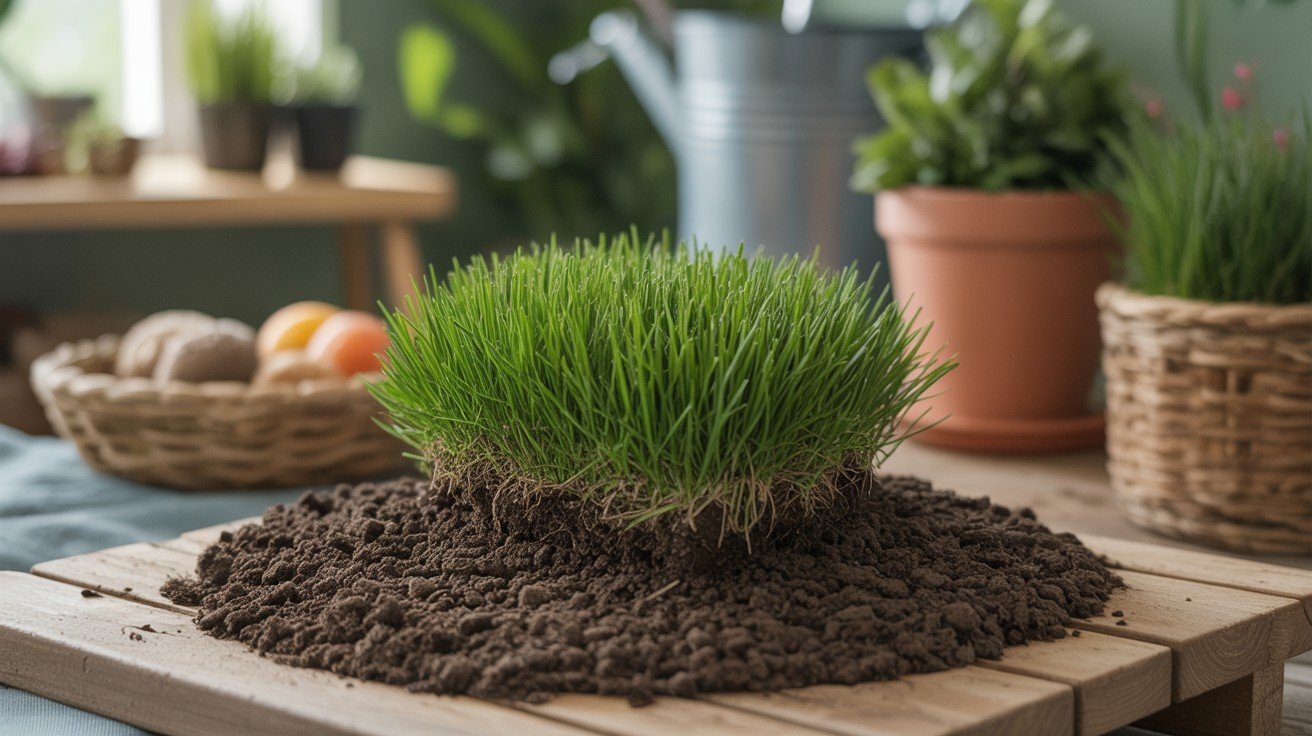
Lawn soil is dense, heavy, and compact. It’s designed for structure, not for growing plants.
This soil is a mix of clay, rocks, and packed dirt. Landscapers use it as a foundation layer for projects.
It creates a stable base under topsoil or sod:
- Dense and compact texture
- Contains clay and rocks
- Poor drainage ability
- Very low nutrient content
- Hardens over time
Think of it as the foundation of your yard. Lawn soil prevents erosion and provides structural stability. But it’s terrible for roots. Grass can’t grow in pure lawn soil, it’s too hard and lacks nutrients.
What Is Topsoil?
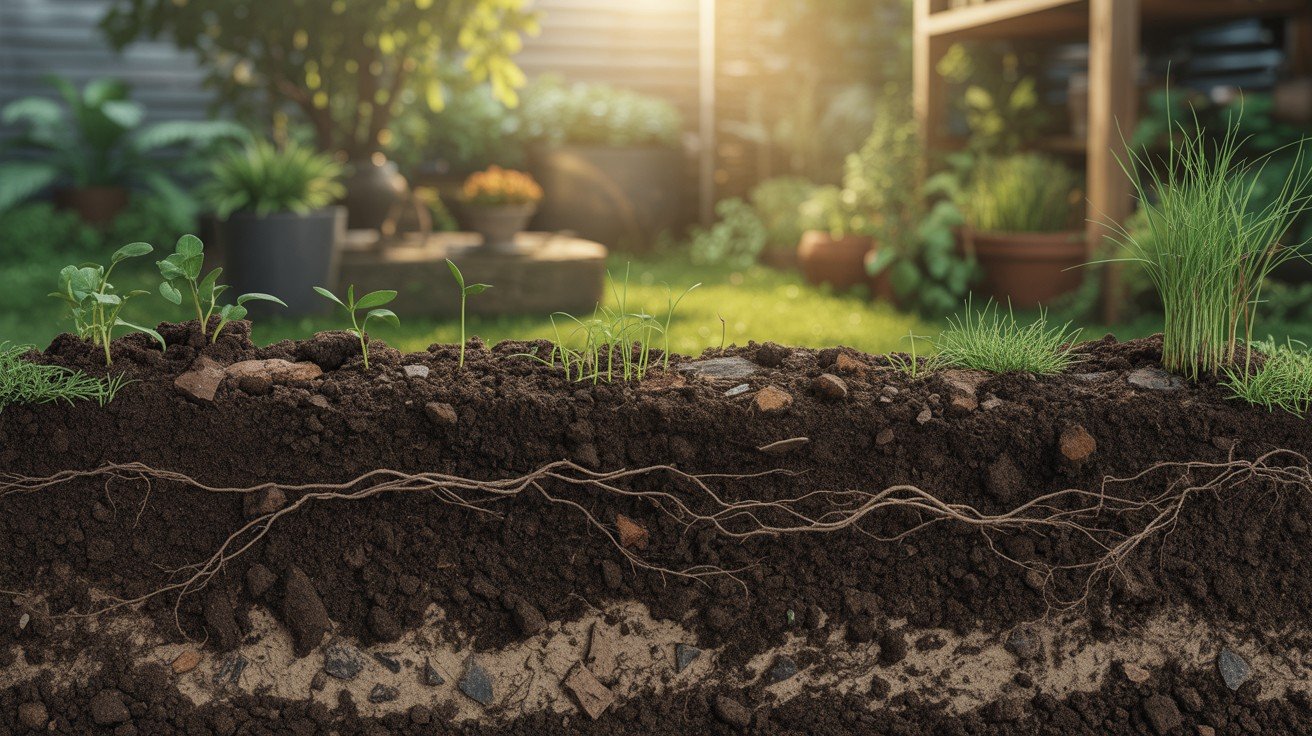
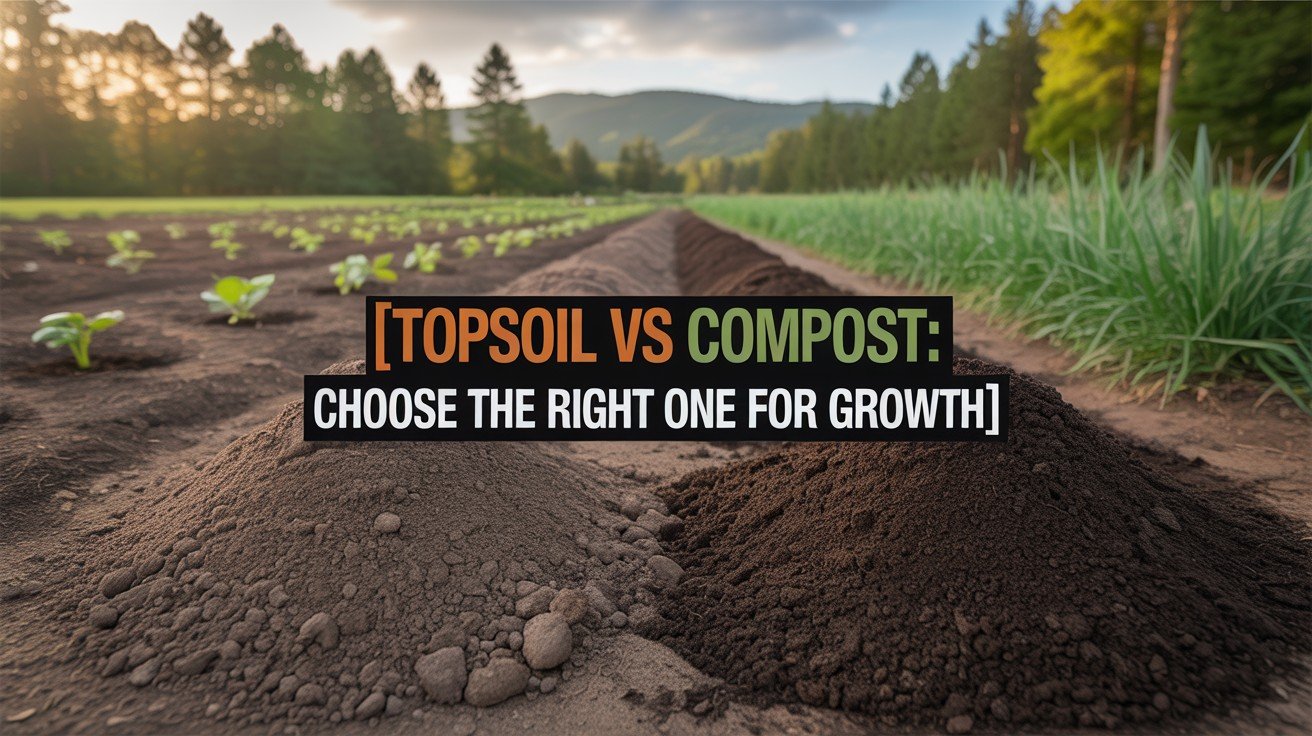
Topsoil is the living layer where plants actually grow. It’s the top 5-10 inches of earth in healthy ground.
This soil is packed with organic matter, beneficial microbes, minerals, sand, moisture, and air pockets.
Everything plants need lives in topsoil:
- Loose, workable texture
- Rich in organic matter
- High nutrient density
- Good drainage and moisture retention
- Contains sand and air spaces
You’ll find two types at garden centers. Natural topsoil comes straight from the ground with all its organic content intact. Screened topsoil has been filtered to remove rocks, roots, and debris it’s cleaner but may have less organic matter.
Key Differences Between Top Soil and Lawn Soil
These soils look similar in the bag but work completely differently. Here’s what separates them.
| Feature | Lawn Soil | Topsoil |
| Composition | Rocks, clay, and compact dirt | Sand, organic matter, microbes, and minerals |
| Density & Texture | Heavy, dense, and compact | Light, loose, and airy |
| Weight | Packs down tight | Stays loose and workable |
| Root Growth | Restricts growth and suffocates roots | Let’s roots expand freely |
| Nutrient Content | Minimal nutrients, poor for growth | Nutrient-rich, ideal for lawns and gardens |
| Plant Support | Requires heavy fertilization for basic growth | Feeds plants naturally from decomposed organic matter |
| Drainage | Compacts easily and blocks water movement | Drains well with balanced moisture retention |
| Water Behavior | Rain sits on top or runs off | Water moves through, but doesn’t disappear too fast |
| Moisture Issues | Causes root drowning or drying out | Prevents disease and root rot |
| Primary Purpose | Creates a stable base and prevents erosion | Provides a growing environment for plants |
| Best Use | Foundation layer under topsoil or sod | The top layer where grass and plants grow |
When to Use Lawn Soil vs Topsoil?
Use lawn soil for grass-specific projects like seeding or sodding, and use topsoil for general landscaping, garden beds, and filling large areas.
| Lawn Soil | Topsoil |
| Purpose: Structure and Stability | Purpose: Plant Growth and Nutrition |
| Used for building structures, not growing grass | Used for anything that needs to grow |
| Solves structural problems in your yard | Creates the perfect environment for roots and growth |
| Best Situations | Best Situations |
| Filling deep holes or low spots | Starting new lawns or laying sod |
| Leveling uneven ground | Creating garden beds |
| Building stable bases under patios | Improving poor or depleted soil |
| Supporting raised bed structures | Mixing with compost for extra organic matter |
| Creating walkway foundations | Preparing the ground before mulching |
| Controlling erosion on slopes | Supporting root growth in planting areas |
| Major landscape overhauls after tree removal | Overseeding existing lawns |
| Key Advantage | Key Advantage |
| Compacts well and stays put, won’t wash away or settle unevenly | Loose texture and rich nutrients support everything from grass seed to garden vegetables |
| Critical Rule | Critical Rule |
| Always top it with real topsoil before planting anything | Never plant directly into lawn soil without a topsoil layer |
| When to Choose | When to Choose |
| When stability matters more than drainage | Whenever plants are involved in the project |
| Works as a bottom layer in deep holes (2+ feet) | Spread as a top layer for grass to establish faster and grow stronger |
How to Choose Between Lawn Soil vs Topsoil?
Choose based on your project type: lawn soil for grass-related work and topsoil for everything else, considering your budget and soil quality needs.
| Decision Factor | Choose Lawn Soil | Choose Topsoil |
| Primary Question | Am I building? | Am I growing? |
| Project Type | Filling holes, leveling ground, or building bases | Growing grass, plants, or gardens |
| Root Involvement | No roots will go here | Roots need to grow and spread here |
| Best Applications | Low spots under patios, structural foundation work | New lawns, garden beds, planting areas |
| When Both Needed | Use as a bottom layer for structure and stability | Use as a top layer over lawn soil for planting |
| Cost Consideration | Saves money for non-planting projects | Investment required for healthy plant growth |
| Key Question to Ask | Will roots go here? If not, lawn soil works | Will roots go here? If yes, topsoil is non-negotiable. |
Common Mistakes When Using Lawn Soil or Topsoil
Even good soil causes problems when used incorrectly. Here are the biggest mistakes I see homeowners make.
- Lawn soil is dense and low in nutrients, while topsoil is loose and rich in nutrients that support plant growth.
- Use lawn soil for structural purposes like leveling or filling low spots, and topsoil for planting lawns and garden beds.
- You can layer lawn soil on the bottom and topsoil on top, or mix them to improve compacted areas.
- Apply 3-6 inches of topsoil for new lawns, and never plant directly into pure lawn soil.
- If roots need to grow, choose topsoil if not, choose lawn soil, and always test your soil for proper nutrients.
Conclusion
So, top soil vs lawn soil comes down to using each one for the right purpose. Lawn soil gives you support and stability, while topsoil provides the conditions your plants and grass need to grow well. Using the wrong one can slow progress or create problems later.
Lawn soil is best for filling low spots and shaping the ground. Topsoil adds nutrients and helps roots spread. When you use them together, place lawn soil underneath and topsoil on top so your lawn gets both strength and good growing conditions. Testing your soil helps you avoid simple mistakes.
If you still have questions about your yard, feel free to ask. I am happy to help you sort out what your space needs. And if this guide made things clearer, share it with someone who feels unsure in the soil aisle.
Frequently Asked Questions
Can I use lawn soil instead of topsoil to save money?
No. Lawn soil is too dense and nutrient-poor for planting. It’s designed for structural stability, not growth. Using it for grass or gardens will result in poor drainage, weak roots, and failed plants. Always use topsoil where plants need to grow. It’s worth the investment.
How much topsoil do I need for a new lawn?
Plan for 3-6 inches of topsoil over your entire lawn area. Measure your lawn’s square footage and multiply by the depth in feet (0.25-0.5 feet). Most suppliers sell topsoil by the cubic yard. One cubic yard covers about 100 square feet at 3 inches deep.
Can I mix lawn soil and topsoil?
Yes. Mixing improves compacted or clay-heavy soil. Till your existing ground, add topsoil, and blend thoroughly. Aim for at least 50% topsoil in the mix. This creates better aeration, drainage, and nutrient availability while maintaining some structural stability from the lawn soil.
What’s the difference between topsoil and garden soil?
Garden soil is topsoil blended with extra compost, sand, and organic matter. It’s richer and designed for vegetables and flowers in raised beds. Topsoil alone works perfectly for lawns and is more affordable. Use garden soil only where plants need maximum nutrition.
Do I need to test the soil if I’m buying new topsoil?
Yes. Even quality topsoil can have pH imbalances or missing nutrients specific to your grass type. Testing shows exactly what amendments you need before planting. It costs $10-20 and prevents expensive failures. Test both your existing soil and new topsoil for the best results.