
You’re out in the yard on a chilly morning, trying to decide if it’s still safe to mow. The tricky part is that the calendar doesn’t tell you much. What truly matters is how warm the soil and air are, because grass reacts to temperature long before winter officially arrives.
As the weather cools, grass slows down and becomes easier to damage. Cutting it at the wrong time can leave weak spots that struggle to recover until spring. Knowing the right temperature range helps you avoid stress on your lawn when it’s already under pressure.
This guide breaks things down so you can make a clear choice. You’ll learn the exact temperatures when mowing is helpful and when it’s better to stop. With a few simple cues, you’ll know how to care for your lawn through the colder months.
How Cold Is Too Cold to Mow Your Lawn?
Stop mowing when temperatures drop below 50°F. That’s the magic number where grass basically stops growing. I’ll explain why this matters and what happens at different temperatures.
Below 50°F: Avoid Mowing
Grass growth essentially stops below 50°F. Your lawn isn’t dead, but it’s going into rest mode. Mowing at this temperature does more harm than good.
The ideal mowing temperature range is 50,80°F. Below that, you’re just stressing grass that’s trying to prepare for winter. In Kansas and similar climates, once you hit 50°F or below, put the mower away until spring.
Below 40°F: Mowing Should Completely Stop
Here’s what happens. Grass slows down significantly once daytime temperatures stay below 40, 50°F for several days. Your lawn won’t grow tall enough to need cutting.
If temperatures stay below 40°F for a week, grass growth stops entirely. You’re not saving time by mowing early. You’re damaging grass that can’t recover quickly in cold weather.
Below Freezing (32°F): Absolutely No Mowing
Never mow frozen grass. This is the most important rule. Frozen grass blades become brittle like tiny icicles. They break instead of bending.
Walking or mowing on frozen grass creates a shearing effect that severs the roots underground. You’ll see brown patches and dead spots come spring. Wait until temperatures rise above freezing and the frost melts completely before you even walk on your lawn.
How Cold Weather Affects Grass Growth?
Cold weather changes how your grass behaves. Understanding these changes helps you make better mowing decisions.
- Grass enters survival mode: When soil loses heat, grass shifts energy toward root preservation instead of blade growth. It’s like hibernation for plants.
- Mowing wastes precious energy: Cutting blades during dormancy forces the plant to use energy it needs to survive winter instead of protecting roots underground.
- Warm season grasses shut down early: Bermuda, Zoysia, and St. Augustine grow best at 80-95°F and start going dormant once temperatures drop below 65°F.
- Cool season grasses thrive in the fall: Kentucky Bluegrass, Fescue, and Ryegrass grow best at 60-75°F but go dormant when soil temperatures drop below 40°F.
- Know your grass type: Your grass type determines when it goes dormant and changes everything about your cold-weather mowing schedule.
- Cut blades can’t recover in cold: Without warmth, the grass can’t heal itself or grow back properly after mowing.
- Weak grass invites problems: Mowing dormant grass leaves your lawn open to pests, weeds, and disease because it’s too weak to fight back until spring.
Signs It’s Too Cold to Mow (Beyond Just Temperature)
Your thermometer isn’t the only tool you need. Your lawn will tell you when it’s too cold to mow. Here are the clear signs I look for every fall.
- Mowing sessions stretch longer: What used to be a weekly job now takes two or three weeks. Growth practically stops.
- Colour changes to yellow or tan: Your green lawn turns yellow or tan as dormancy sets in. This is normal, not a disease.
- Footprints linger on the lawn: If your footprints don’t spring back up, your grass has limited resilience and is going dormant.
- Grass feels dry and brittle: The grass feels dry and brittle when you touch it, not soft and flexible like growing grass.
- Fall weeds pop up everywhere: Dandelions, henbit, and chickweed appear when your grass slows down, signalling the growing season is over.
The Risks of Mowing at Too Cold Temperatures
Mowing cold grass isn’t just ineffective. It actively damages your lawn. The problems you create in the fall will haunt you come spring. Let me show you what goes wrong.
Damage to Frozen or Frosted Grass
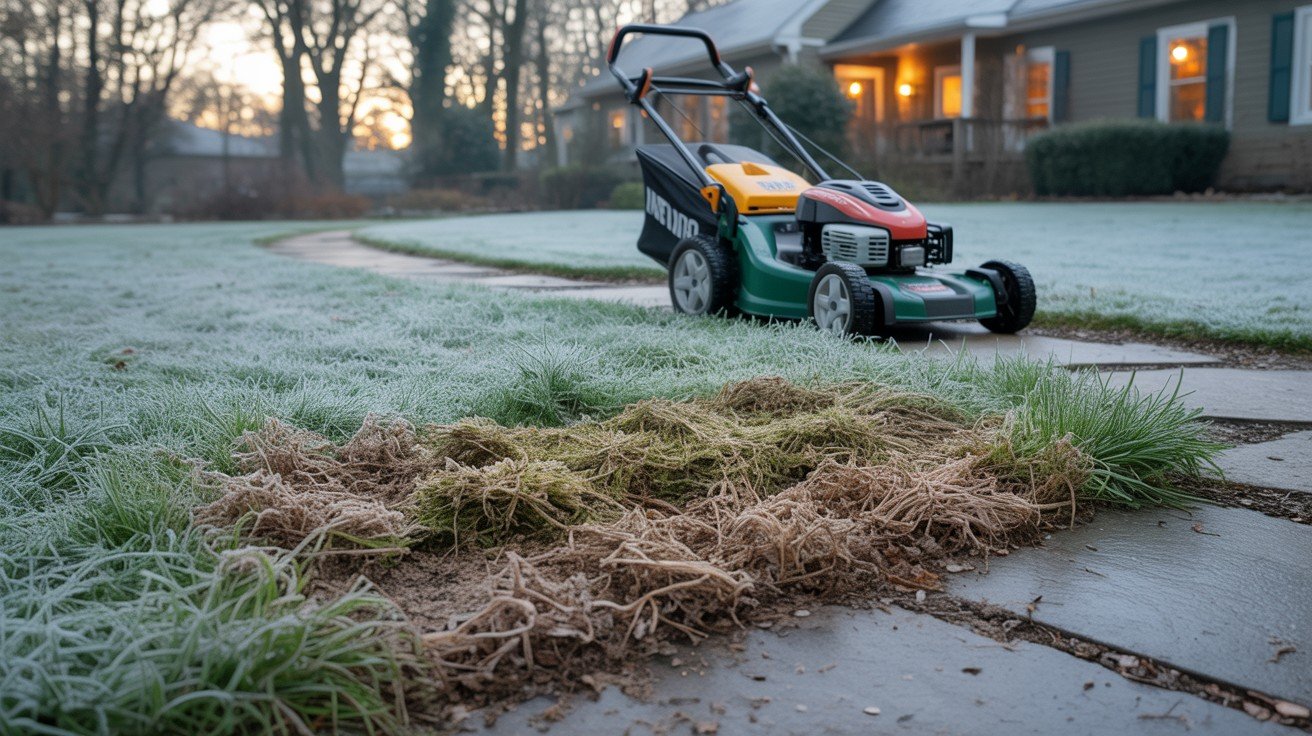
Frost freezes water inside grass cells, making them incredibly fragile. Mowing or walking on frost-covered grass ruptures these cells like crushing frozen fruit. You’ll see brown patches and dead spots that can’t repair themselves until spring.
The damage goes deeper than just the blades. Where frozen and unfrozen soil layers meet underground, mowing can actually sever the roots, and your grass loses its anchor. Those damaged areas struggle to recover or don’t come back at all in the spring.
Turf Diseases
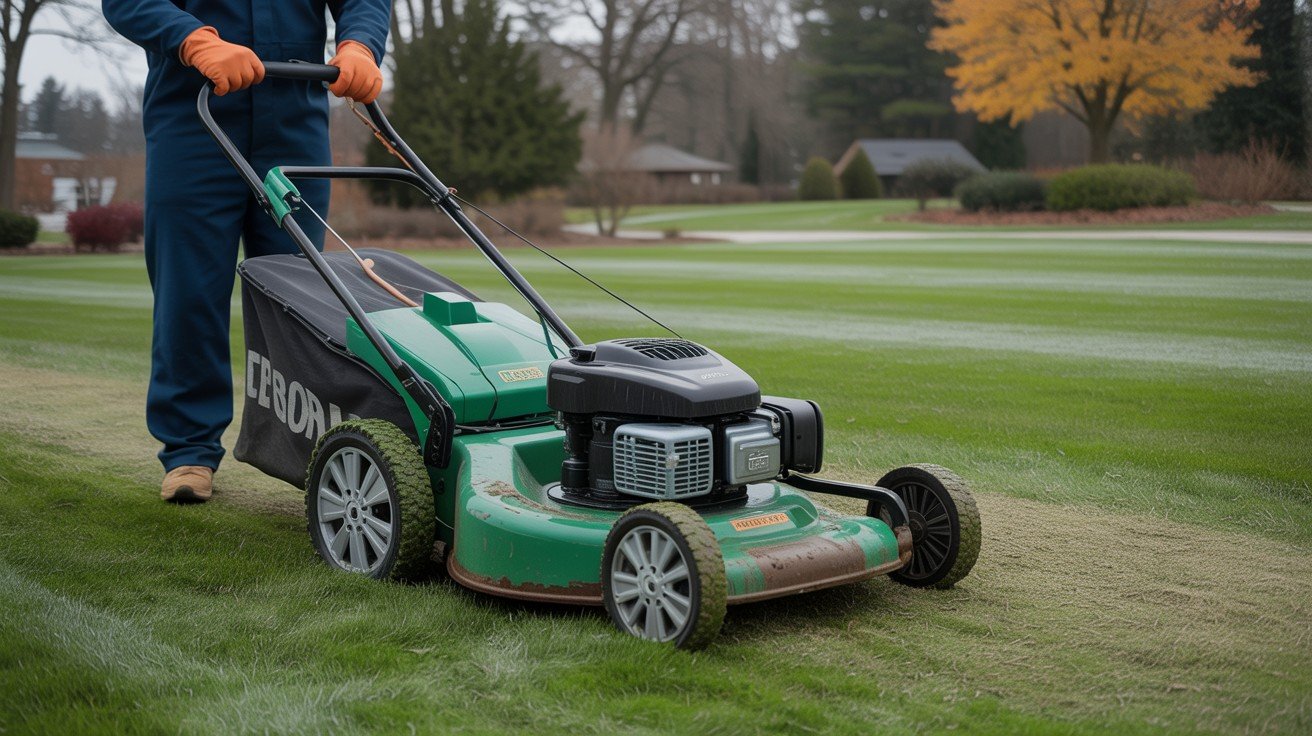
Cold and wet is a terrible combination. These conditions create the perfect environment for snow mould. This fungal disease loves grass that’s been cut too short going into winter.
Excess moisture gets trapped under snow or frost and smothers your grass. The grass can’t breathe. Mowing in cold weather makes this worse because you’re removing protective blade length that would normally help moisture evaporate. Disease spreads faster on stressed, shortened grass.
Mower and Soil Damage
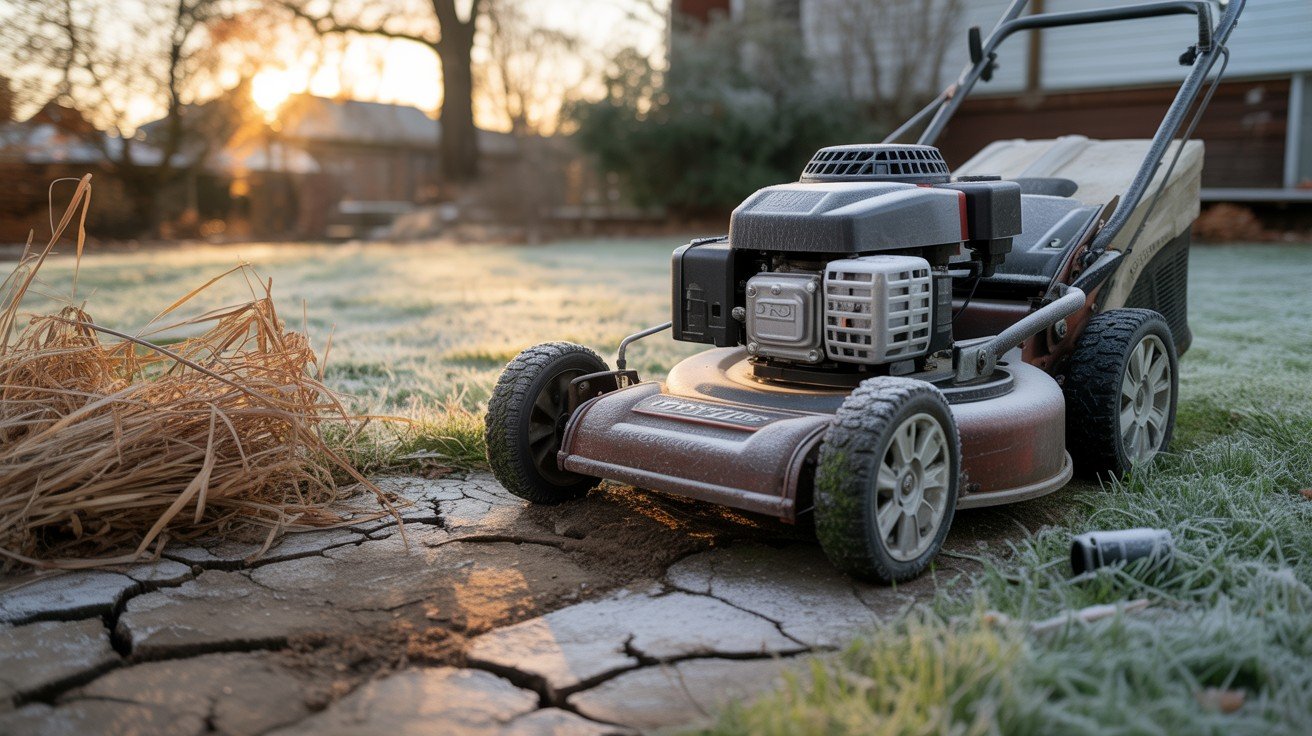
Your mower wasn’t built for frozen ground. The blades can scalp areas where the soil is uneven and frozen solid. Hitting frozen dirt dulls your blades much faster than cutting grass.
Soil compaction becomes a serious problem in frozen conditions. When you drive or walk on cold, wet soil, you pack it down tight. This reduces root strength because roots can’t penetrate compacted soil easily. Your grass will have a harder time recovering in spring, growing slower and weaker than it should.
When to Stop Mowing Before Winter?
Knowing when to put the mower away saves your lawn and your time. The calendar matters less than the temperature. Here’s how I decide when the mowing season is officially over.
- Watch temperatures, not dates: Stop mowing once temperatures consistently stay below 50°F for a full week (or 40°F in colder regions).
- Your location matters: Northern regions go dormant in September, while southern states keep growing into December. Use your local weather, not national guidelines.
- Warmer climates mow year-round: Deep South states, like Florida, may never fully stop mowing based on grass type and local temperatures.
- Time your final mow right: Mow in late fall before the first frost hits. Check your local frost date predictions from weather services.
- Lower blade height gradually: Drop your mower blade by half an inch each time over your last few mows, ending at 2-2.5 inches to prevent shock.
Ideal Mowing Heights When Temperatures Are Dropping
Your mowing height needs to change as winter approaches. Too short or too long both cause problems. Here’s exactly where you should set your mower blade based on your grass type.
Recommended Winter Heights
Different grass types need different heights going into winter. These measurements are specifically for Kansas and similar climates. Your grass type determines your final cut height.
Here’s what I recommend:
Fine Fescue, Tall Fescue, Perennial Ryegrass: 2.5,3 inches
Kentucky Bluegrass, Buffalograss: 2,3 inches
Zoysiagrass: 1,2 inches
Bermudagrass: 1,1.5 inches
Don’t guess your grass type. If you’re not sure what you have, take a photo to your local garden centre. They can identify it for you. Using the wrong height weakens your lawn before winter even starts.
Why Height Matters
Cutting too short creates serious problems. Your grass goes into shock. The roots get exposed to freezing temperatures. Winter injury spreads across your lawn, leaving brown, dead patches that won’t recover in spring.
Leaving grass too long causes different issues. Long blades mat down under snow and trap moisture. This creates the perfect environment for snow mould and other fungal diseases. The grass underneath suffocates and rots.
The right height protects your grass all winter. It’s tall enough to insulate roots but short enough to prevent matting. This balance keeps your lawn healthy and ready to bounce back when spring arrives.
Mowing Safely in Cold Weather
You might need to mow once more before winter. Follow these rules carefully because doing it wrong causes more damage than not mowing at all.
Only Mow in the Warmest Part of the Day
Timing is everything when mowing in cold weather. Wait until mid-afternoon when temperatures peak above 50°F. Early morning is the worst time because the frost hasn’t melted yet.
The sun needs time to warm both the air and the soil. Even if the air temperature is 50°F at noon, the grass might still be too cold from overnight lows. Give it a few hours of sunshine before you start the mower.
Ensure the Grass is Completely Unfrozen and Dry
Check your lawn carefully before mowing. No snow, frost, or icy blades. If you see any white coating on the grass, wait longer.
Never mow after a recent frost until the sun has completely melted it. Walk across your lawn first. If the grass crunches under your feet or feels stiff, it’s still too cold. Wet grass from melted frost also clogs your mower and clumps badly, so wait until blades are dry to the touch.
Follow the One-Third Rule
This rule matters more in cold weather than at any other time of year. Never remove more than one-third of the blade height at once. Cutting more shocks already stressed the grass.
If your grass is 4 inches tall, only cut it down to 2.7 inches. Need it shorter? Mow again in a few days if temperatures allow. Gradual trimming gives cold grass time to adjust without severe stress.
Use Sharp Blades
Dull blades tear grass instead of cutting it cleanly. Cold-stressed grass is already vulnerable. Torn blades turn brown at the tips and invite disease into the damaged tissue.
Sharpen your mower blades before that last fall mow. A clean cut heals faster than a ragged tear. Your grass needs every advantage it can get going into winter, and sharp blades are an easy way to help.
Extra Tips to Protect Your Lawn as Temperatures Drop
Stopping the mower is just the start. Your lawn needs extra care as winter approaches. These simple steps keep your grass healthy through the cold months.
- Aerate in late fall: This reduces soil compaction and lets water and nutrients reach roots before the ground freezes.
- Add mulch to weak spots: Put a light layer of mulch or straw on thin areas, newly seeded spots, and high-traffic zones to protect roots from harsh freeze-thaw cycles.
- Keep off frozen grass: Don’t walk on your lawn when it’s cold or frozen. Every step breaks fragile blades and damages roots that can’t recover while dormant.
- Skip mowing after fall fertiliser: Late-fall fertiliser feeds the roots, not the blades. Mowing forces your grass to heal cut blades instead of building strong roots.
- Water deeply before the first freeze: Give your lawn one good watering before winter hits to help roots store moisture and survive the dry winter months.
Conclusion
Now you know what temperature is too cold to mow grass. The rule is simple: once temps stay below 50°F, it’s time to stop. And mowing frozen grass below 32°F will only cause damage, so keep the mower stored on those days.
Your lawn often hints at what it needs. Slower growth, faded colour, and footprints that stay visible all signal that cutting the grass would do more harm than good. Paying attention to these cues helps your lawn stay healthy through the colder months.
You can handle this with ease. Watch the temperature, check for frost, and pay attention to how your grass reacts. If you need help sorting out what’s right for your area or grass type, feel free to ask. I’m here to help you make the best choice for your yard.
Frequently Asked Questions
Can I mow grass at 45 degrees?
No, avoid mowing at 45°F. Grass growth stops below 50°F, so mowing won’t help and may stress your lawn. Wait for temperatures to rise above 50°F consistently, or put your mower away until spring arrives.
What happens if you mow frozen grass?
Frozen grass blades become brittle and break under mower pressure. This ruptures cell walls and can sever roots underground. You’ll see brown patches and dead spots that won’t recover until spring. Always wait until the frost melts completely.
Should I mow my lawn before the first frost?
Yes, mow one final time in late fall before the first frost hits. Gradually reduce blade height to 2-3 inches for most grass types. This prevents matting under snow while protecting roots from winter damage.
At what temperature does grass stop growing?
Grass essentially stops growing below 50°F. Cool-season grasses slow down around 50°F and go dormant below 40°F. Warm-season grasses stop growing even earlier, around 65°F, and go fully dormant below 55°F.
Is it OK to mow wet grass in cold weather?
No, avoid mowing wet grass in cold weather. Wet blades clump badly and clog your mower. Combined with cold temperatures, wet grass is more vulnerable to tearing and disease. Wait until the grass is completely dry before mowing.