
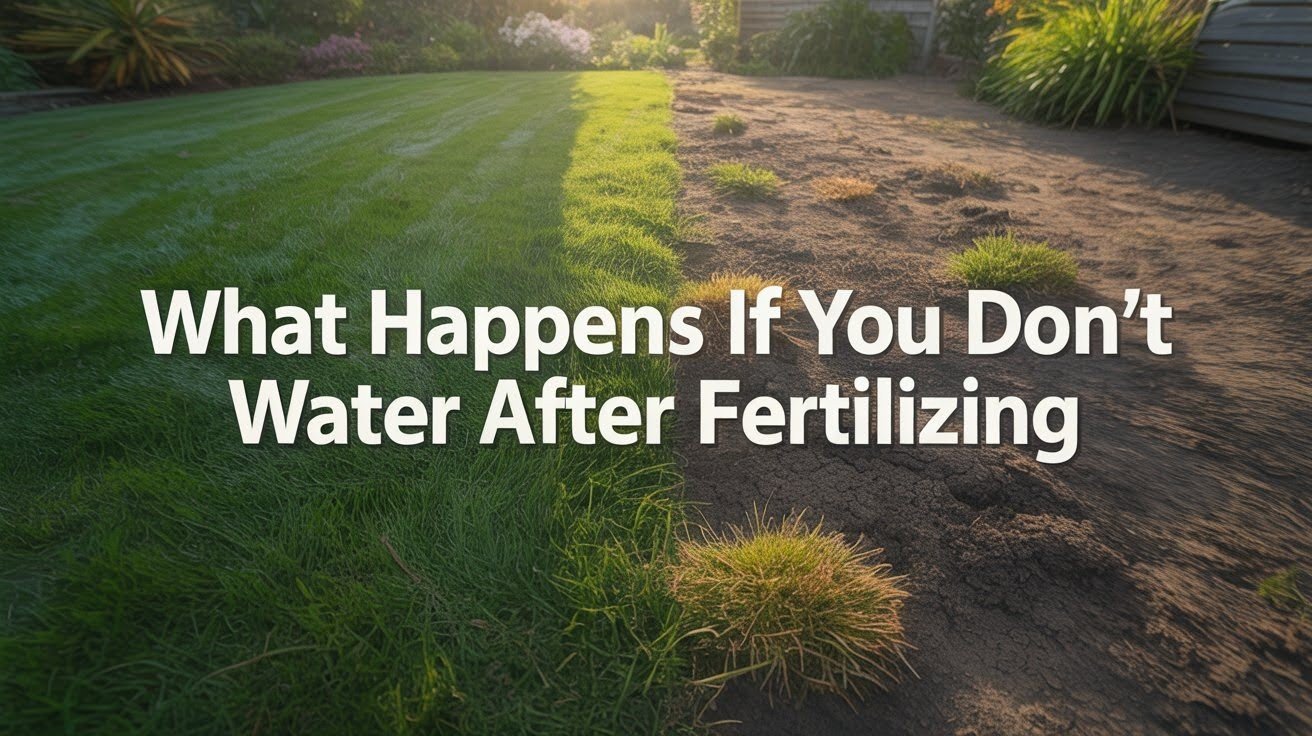
Have you ever put fertilizer on your lawn and thought about whether it is really necessary to water it afterwards? That answer could be the main reason why your yard looks either beautifully green or it is dry and patched.
Fertilizer that is left on the grass without watering cannot go deep where it is needed to be. So instead of a food source, it turns into a risk that shortens your time, money, and effort.
Knowing the article that will help you understand what will happen if you don’t water after fertilizing is a smart way to prevent making expensive mistakes and to give your lawn the perfect supply of nutrients for it to be strong and healthy.
What Happens If You Don’t Water After Fertilizing Your Lawn
When you skip watering after applying fertilizer, those carefully measured nutrients never reach the root zone where your grass can actually use them. The granules or liquid formula just sit on the surface, exposed to the sun and wind instead of working below ground.
Your lawn misses out on the feeding you intended to provide. The fertilizer you paid for becomes decoration rather than nutrition, leaving your grass as hungry as it was before you started.
This simple oversight creates a chain reaction of problems. From chemical burns to environmental waste, what happens if you don’t water after fertilizing affects more than just your lawn’s appearance. It impacts the health of your entire yard and the surrounding area.
Risks of Skipping Watering
When you skip watering after fertilizing, the fertilizer stays on the grass and can burn it instead of feeding it.
- Skipping watering after fertilizing can burn the grass and waste nutrients.
- Water helps the fertilizer reach the roots, where it can feed the lawn.
- Granular fertilizer needs water right after spreading. Liquid fertilizer needs a few hours before watering.
- Too much or too little water can both cause damage.
- A steady 20 to 30-minute soak after fertilizing keeps the lawn healthy and green.
Why Watering Right After Fertilizing Matters?
Water helps fertilizer move into the soil so the grass can use it to grow strong and green.
- Water carries fertilizer nutrients deep into the soil.
- Roots absorb nitrogen, phosphorus, and potassium through the moisture.
- Even watering spreads nutrients across the whole lawn.
- Uneven watering leaves some spots burned and others unfed.
- Without water, fertilizer stays on the surface and harms the grass.
- Proper watering helps the lawn grow evenly and stay healthy.
- Skipping watering makes the entire fertilizing effort go to waste.
Correct Watering Timing and Duration
Timing your watering correctly makes all the difference in how well your fertilizer performs and how safely it feeds your grass.
Granular Fertilizer
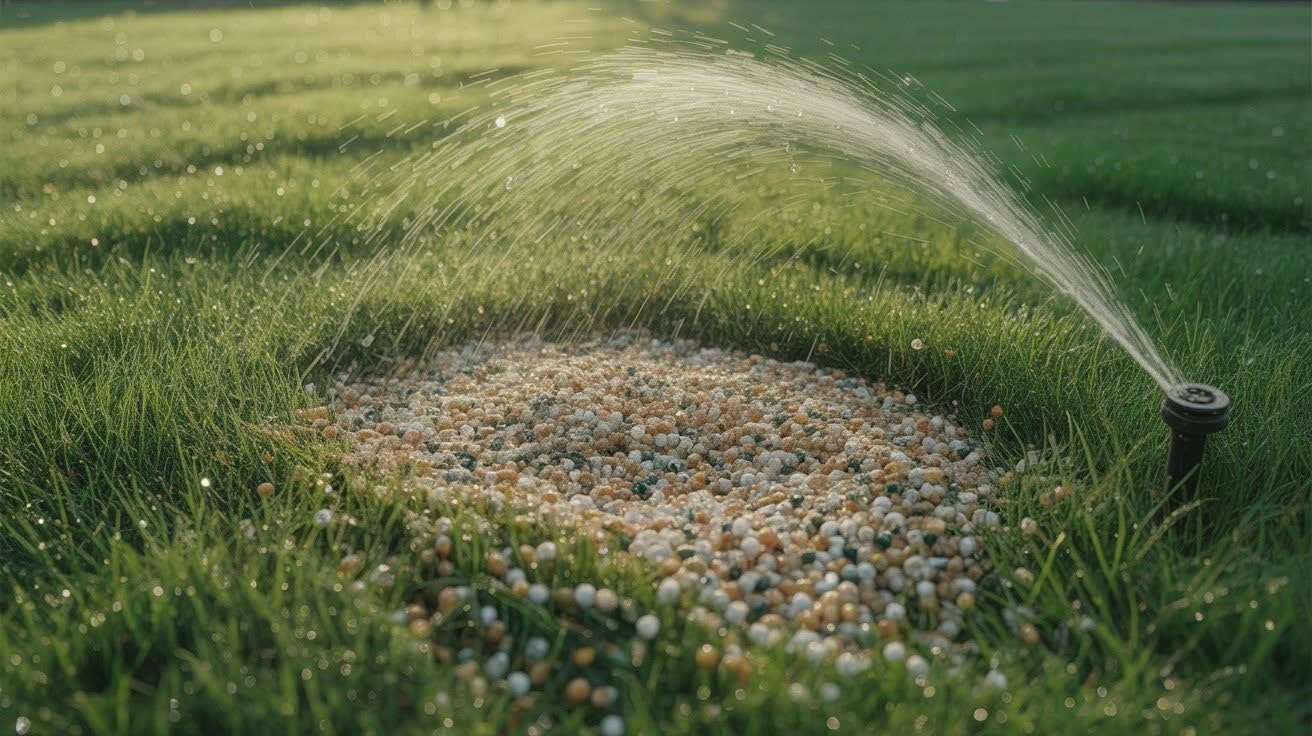
Water immediately after you finish spreading granular products across your lawn. Don’t wait for the weekend or until later in the day. Those dry pellets need moisture right away to start working.
Quick watering prevents granules from burning leaf blades and starts the nutrient dissolution process. The sooner water reaches those pellets, the sooner they can move into the soil where roots are waiting.
Plan your application for times when you can water right after. Morning works best because grass blades dry before evening, reducing disease risk while giving fertilizer plenty of time to soak in during the day.
Liquid Fertilizer
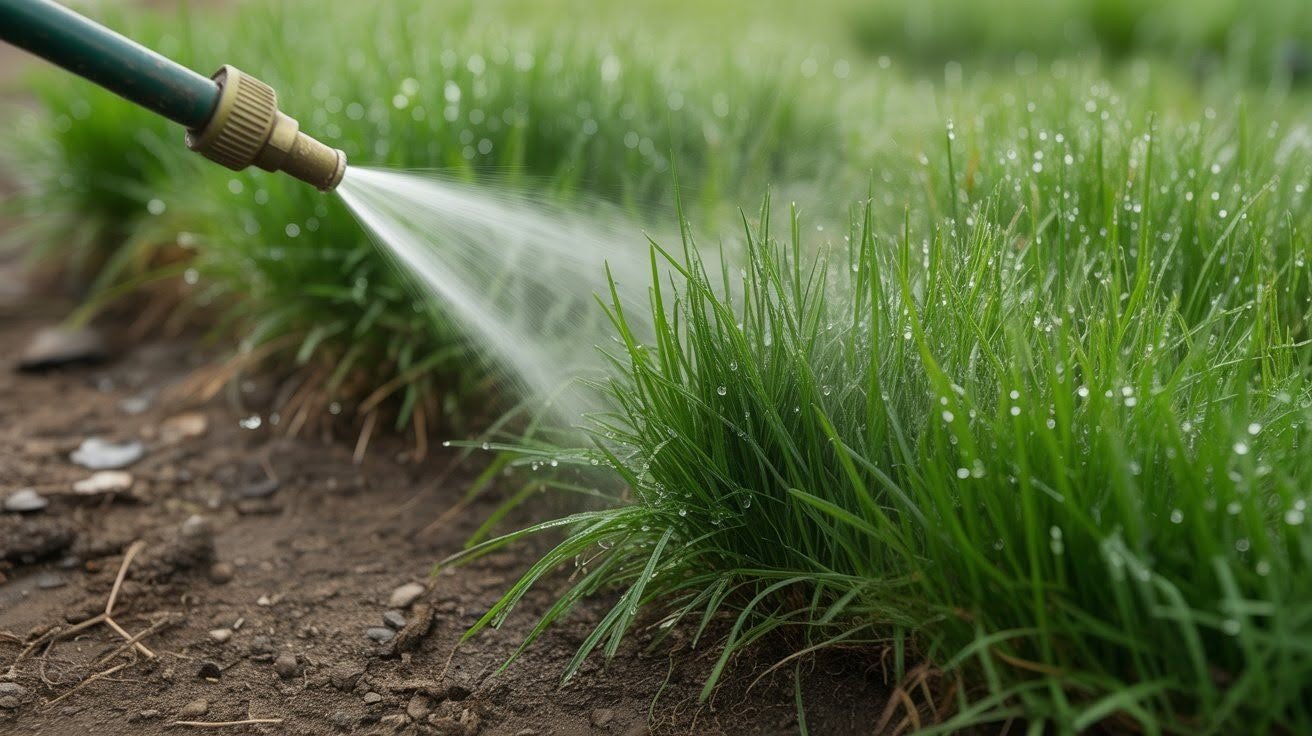
Liquid fertilizers need a different approach since they’re already dissolved. Wait 2 to 4 hours after spraying to let the formula dry completely on the grass blades before adding more water.
This waiting period allows leaf absorption to happen. Grass can take in some liquid nutrients directly through the blades, but only if the solution stays in contact long enough to work.
Once the grass looks and feels dry to the touch, give it a thorough watering. This rinses any remaining formula into the soil and helps roots access the nutrients that didn’t absorb through the leaves.
Understanding Absorption Time Frames
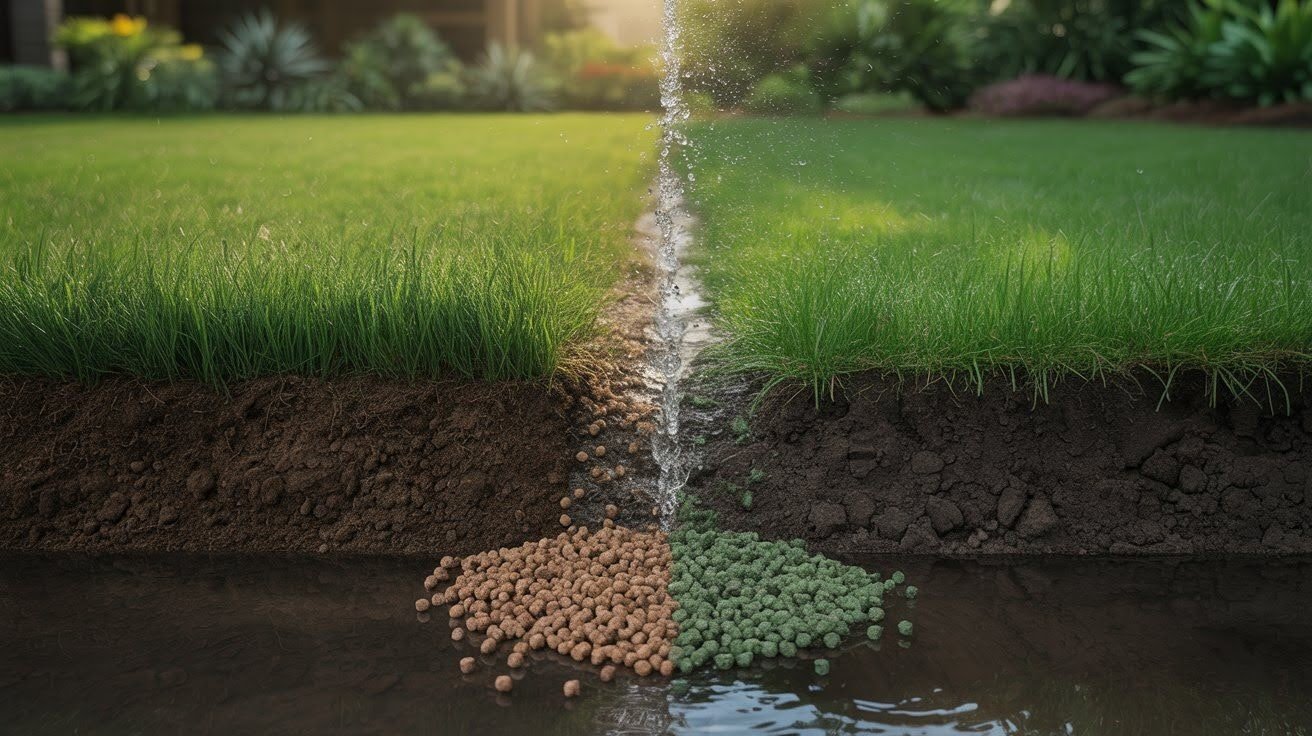
Different fertilizer formulations need different amounts of time to become effective in your soil. Fast-release products start working within hours, while slow-release versions take days to begin feeding your grass.
Water helps both types work properly, but the timing matters more for quick-release products. These concentrated formulas can cause damage faster if they’re not watered in, making prompt irrigation critical for safety.
Slow-release fertilizers have a bit more flexibility, but they still need that initial watering to activate. The coating on these granules requires moisture to begin breaking down and releasing nutrients gradually over weeks.
Slow vs. Fast-Release Fertilizer: My Go-To Rule
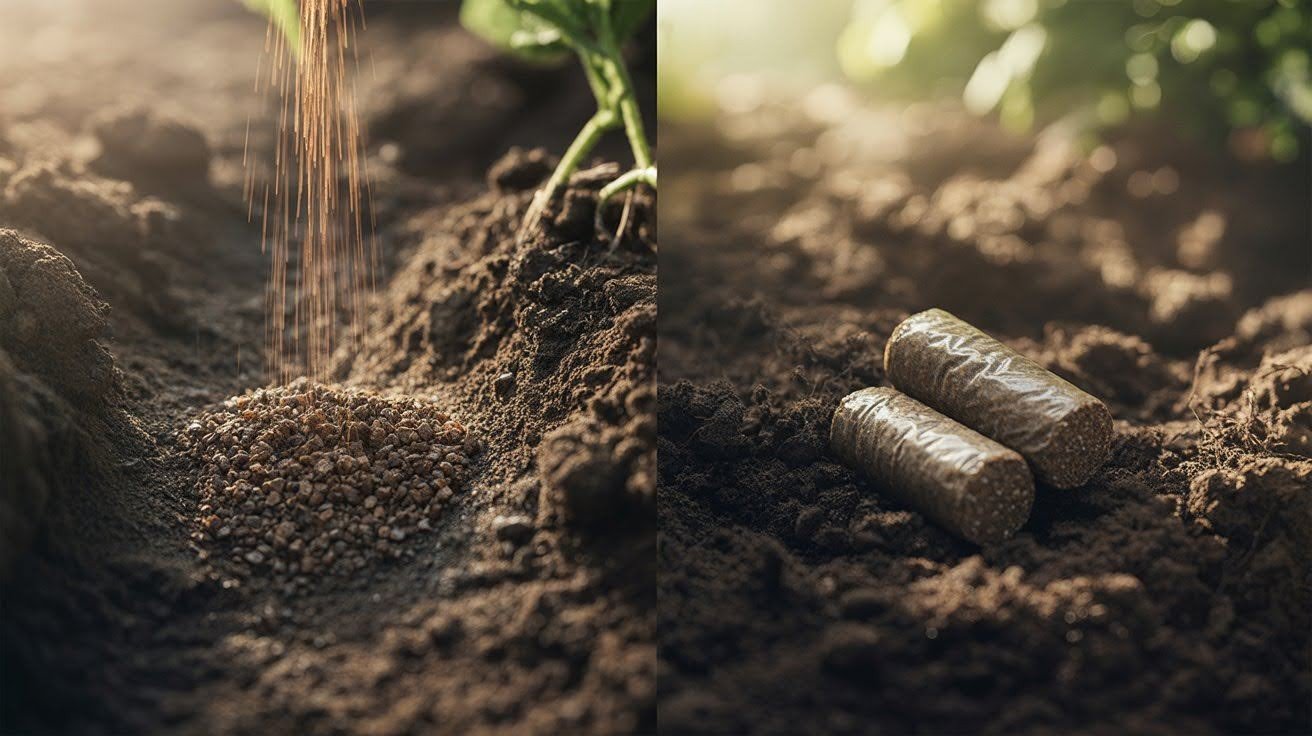
Over time, I’ve learned to check whether a fertilizer is slow-release or fast-release before watering. Fast-release types demand quick watering. They act fast but can burn easily if left dry.
Slow-release fertilizers give you a little breathing room. They’re coated to release nutrients over time, but that coating still needs moisture to activate. I always give them a light watering right after spreading to start the process.
If you’re unsure which one you have, read the label before you start. That small step helps you water correctly and avoid unnecessary stress on your lawn.
My Watering Routine After Fertilizing
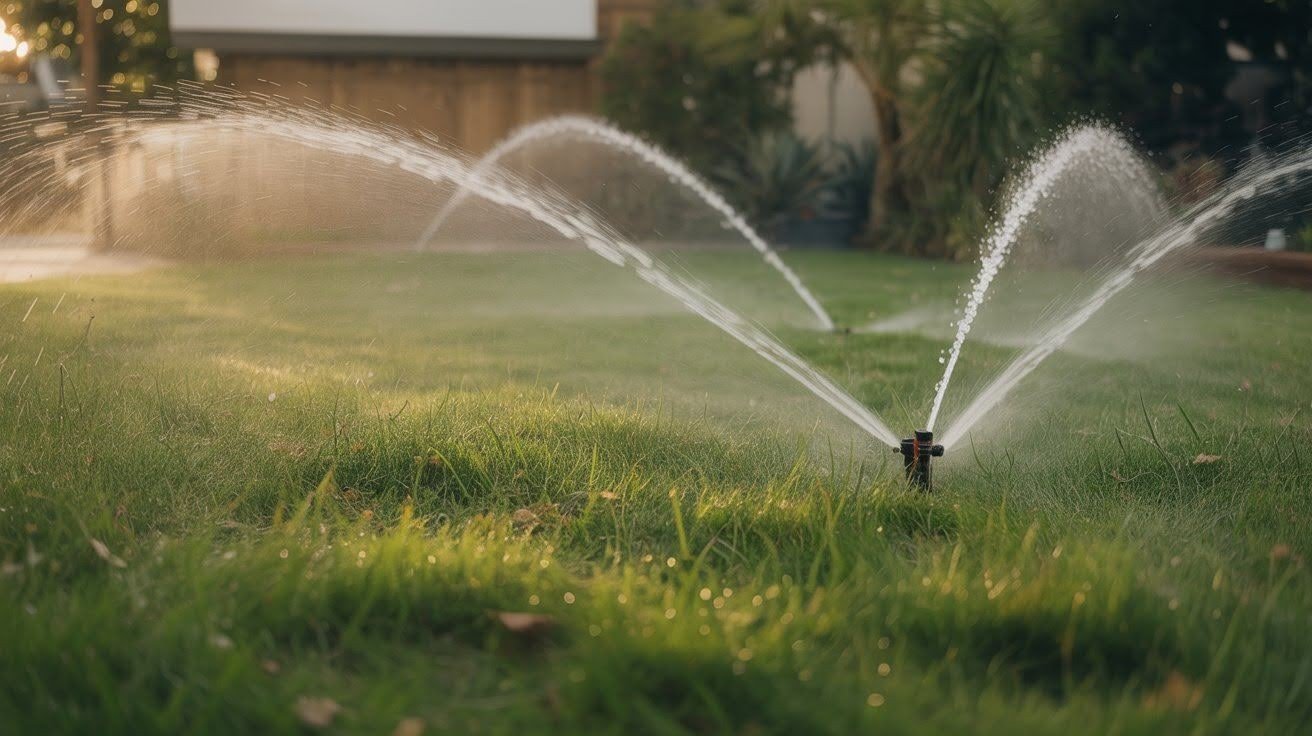
Here’s what I usually do after feeding my lawn: once the fertilizer is down, I grab my sprinkler or hose and give the yard a steady soak for about 20-30 minutes. That’s just enough to move nutrients into the root zone without washing them away.
If it’s early morning, even better, the water has all day to settle in before the heat kicks up. I’ve noticed that this timing keeps my grass greener and reduces those random dry patches that appear after fertilizing.
Consistency matters most. Making watering part of my fertilizing routine has saved me time and money, not to mention kept my lawn looking healthier all season long.
How Long and How Much to Water After Fertilizing?
Your soil should feel damp when you push your finger an inch or two below the surface. Soggy, puddling soil means you’ve overdone it and risk washing those expensive nutrients right out of the root zone.
Move your sprinklers around or check each irrigation zone to confirm even coverage across the entire fertilized area. Dry spots don’t get the nutrients they need, while overwatered areas lose them to drainage and runoff.
Watch where the water flows as you irrigate. If you see runoff heading toward storm drains, driveways, or waterways, reduce your flow rate or water in shorter intervals to keep everything soaking in where you want it.
Smart Timing for Best Results
Light rain forecast for later in the day or tomorrow creates perfect conditions for fertilizing. That quarter-inch of gentle rainfall waters in the product naturally without overwhelming your lawn or causing runoff.
Heavy storms wash nutrients away before roots can absorb them, essentially flushing your investment down the drain. Check your weather app and postpone fertilizing if more than half an inch of rain is coming.
After your first post-fertilizer watering, give your lawn a two or three-day break before returning to your normal irrigation schedule. This pause lets roots pull in the nutrients without competition from excess water pushing everything deeper into the subsoil.
Common Fertilizing Mistakes Related to Watering
Too much water carries nutrients below the root zone where grass can’t reach them. It also encourages shallow root growth since grass never needs to reach deep for moisture, making your lawn weaker in the long run.
Too little water leaves fertilizer sitting on the surface where it can’t feed roots. What happens if you don’t water after fertilizing includes nutrient waste and chemical burns, both caused by insufficient moisture to move the product into the soil.
Fertilizer labels exist for good reasons. They tell you exactly how much to apply and when to water. Ignoring those directions or watering randomly instead of systematically reduces your results and increases your chances of damaging the lawn.
What to Do If You Forgot to Water After Fertilizing?
Get water on that lawn as soon as you remember, even if several hours have passed. Late watering still beats no watering, though the longer the fertilizer sits dry, the higher the risk of burning or nutrient loss.
Look closely at your grass tips for yellowing or browning that signals fertilizer burn. Early-stage damage might reverse with heavy watering, but severe burns mean those blade sections are dead and need time to grow out.
If you see significant burning, flush the affected areas with extra water to dilute and wash away excess fertilizer concentration. You may need to overseed damaged patches once they’ve recovered enough to support new growth.
Building a Healthy Fertilizing and Watering Routine
Deep, infrequent watering beats shallow daily sprinkling for building strong roots. Give your lawn an inch of water once or twice weekly rather than light daily sprinklings that encourage surface roots vulnerable to heat and drought.
Prepare your lawn before fertilizing by mowing to the right height and removing excess thatch buildup. A light watering the day before feeding helps ensure the soil is receptive and reduces the risk of fertilizer sitting on completely dry ground.
Feed your grass during its active growing season when roots are primed to absorb nutrients. Cool-season grasses need spring and fall feeding, while warm-season varieties benefit from late spring and summer applications.
Soil Testing for Better Fertilizing Results
A basic soil test reveals which nutrients your lawn actually needs instead of making you guess. You might find your soil already has plenty of phosphorus but lacks nitrogen, letting you choose a fertilizer formula that fills the real gaps.
Testing also shows your soil pH, which affects how well grass can absorb nutrients. Fertilizing acidic or alkaline soil without correcting the pH first means roots can’t access the nutrients, even when you water properly.
Test your soil every two or three years to track changes and adjust your fertilizing program. This proactive approach prevents both deficiencies and excesses while saving money on unnecessary products.
Tips for Perfect Post-Fertilizing Watering
Apply fertilizer in the early morning when temperatures are cool and the wind is calm, giving you the full day to water before the grass faces afternoon heat stress.
- Water Right After Applying Fertilizer: I always make sure to water my lawn immediately after spreading fertilizer. This helps dissolve the granules and prevents them from sitting on top of the grass, which could otherwise cause spotting or burn marks.
- Go for a Gentle, Deep Soak: Instead of short, frequent watering, I prefer a deep soak that reaches down to the roots. About 20-30 minutes is usually perfect, depending on your sprinkler system.
- Avoid Watering During the Hottest Hour: I’ve found that watering early in the morning works wonders. It gives the soil time to absorb moisture before the sun gets too strong. Midday watering tends to waste water through evaporation and doesn’t let the fertilizer reach the roots efficiently.
- Watch the Weather Forecast: Before fertilizing, I always check the weather. If rain is expected within a day, I let nature handle the watering. But if heavy rain is forecasted, I worry that too much water too fast can wash away the nutrients.
- Keep the Soil Moist for a Few Days: After that first watering, I keep an eye on the soil for the next few days. Lightly moist (not soggy) soil helps nutrients continue to move downward and prevents stress on the grass.
Conclusion
Not watering your lawn after fertilizing is like throwing your effort, money, and the health of your lawn in the trash. What if you don’t water after fertilizing can be a range of things like nutrient wastage, grass getting burned, and even environmental pollution, all of which can be prevented by just 20 to 30 minutes of proper irrigation.
The question of when to water depends on the kind of fertilizer you use, but both granular and liquid products need moisture to work effectively. That first watering dislodges the fertilizer from the surface and drives it down to the roots, where your grass can actually use it to grow thick and green.
By making watering an absolute must-final point in your fertilizing routine-you are not only safeguarding your money but also the lawn. Please, do those few minutes with the sprinkler as seriously as the act of spreading the fertilizer itself.
Frequently Asked Questions
How soon should I water after applying granular fertilizer?
Water immediately after spreading granular fertilizer across your lawn. Waiting even a few hours increases the risk of fertilizer burn and nutrient loss to wind. Quick watering dissolves the granules and moves nutrients into the soil where roots can absorb them safely and effectively.
Can I water too much after fertilizing my lawn?
Yes, overwatering washes nutrients below the root zone where grass can’t access them. Soggy soil also promotes shallow root growth and disease problems. Apply enough water to moisten the top few inches of soil without creating puddles or runoff.
What happens if you don’t water after fertilizing on a hot day?
Hot temperatures speed up chemical reactions between dry fertilizer and grass blades, causing severe burning within hours. The combination of concentrated salts and heat stress damages or kills grass tissue.
Will rain replace the need to water after fertilizing?
Light rain works perfectly for watering in fertilizer, but timing matters. If rain comes within a few hours of application, you’re set. Waiting for rain predicted days later leaves fertilizer exposed too long. Heavy rain can wash nutrients away before absorption occurs.
How long should I run my sprinklers after fertilizing?
Run sprinklers for 20 to 30 minutes, delivering about a quarter to half inch of water. Check soil moisture by pushing your finger two inches down. It should feel damp but not saturated. Adjust timing based on your sprinkler output and soil type.